The logistics sector no longer operates in isolation. An influential report on evolving logistics systems, published in March 2025, concluded that realistic progress towards Net-Zero will depend on far closer collaboration between ports, shipping lines, inland carriers, and technology providers. In other words, decarbonisation has become a systems challenge, not a single operator initiative. However, the same report also revealed that only 35% of companies had Net-Zero goals in place at the beginning of 2025, with many of these companies being unprepared to meet upcoming deadlines. For businesses involved in finished vehicle transport, these shifts pose a range of operational and strategic challenges.

Why vehicle transport matters in the Net-Zero push
Finished vehicle movement sits at the intersection of maritime transport, inland haulage, port operations, and OEM sustainability targets. Within this complex network of exchange, car racking systems are becoming increasingly important. So, what is a car racking system?
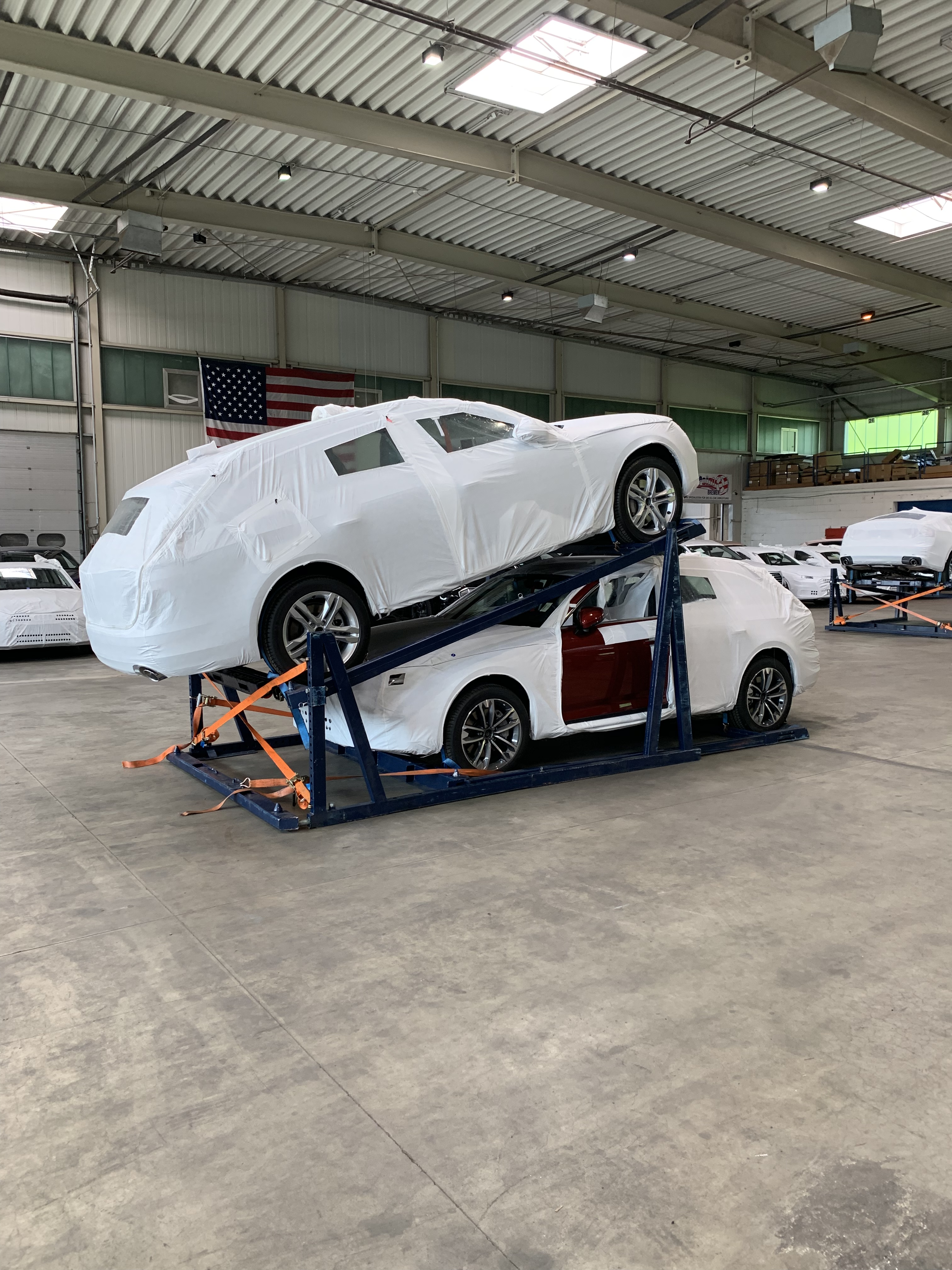
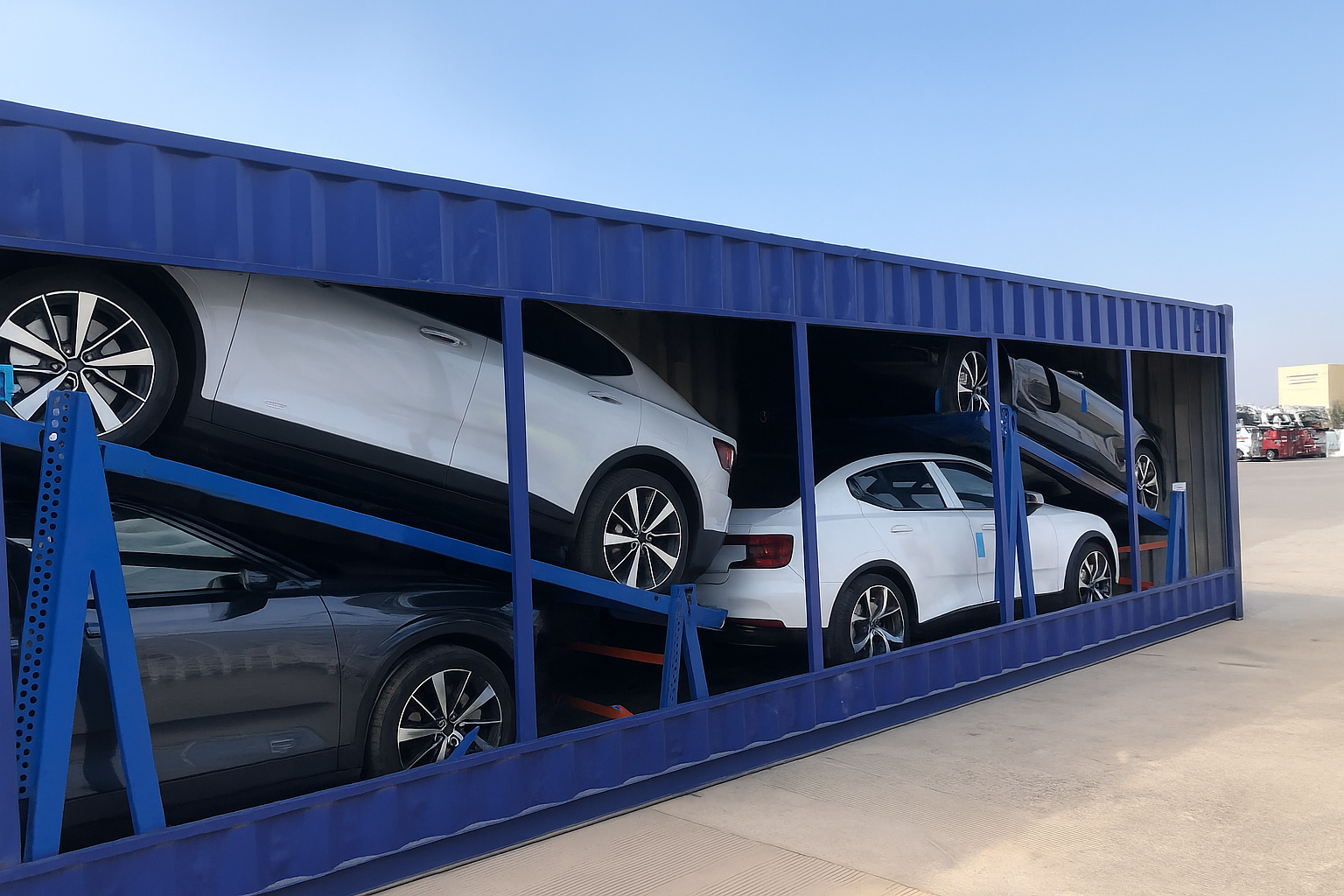
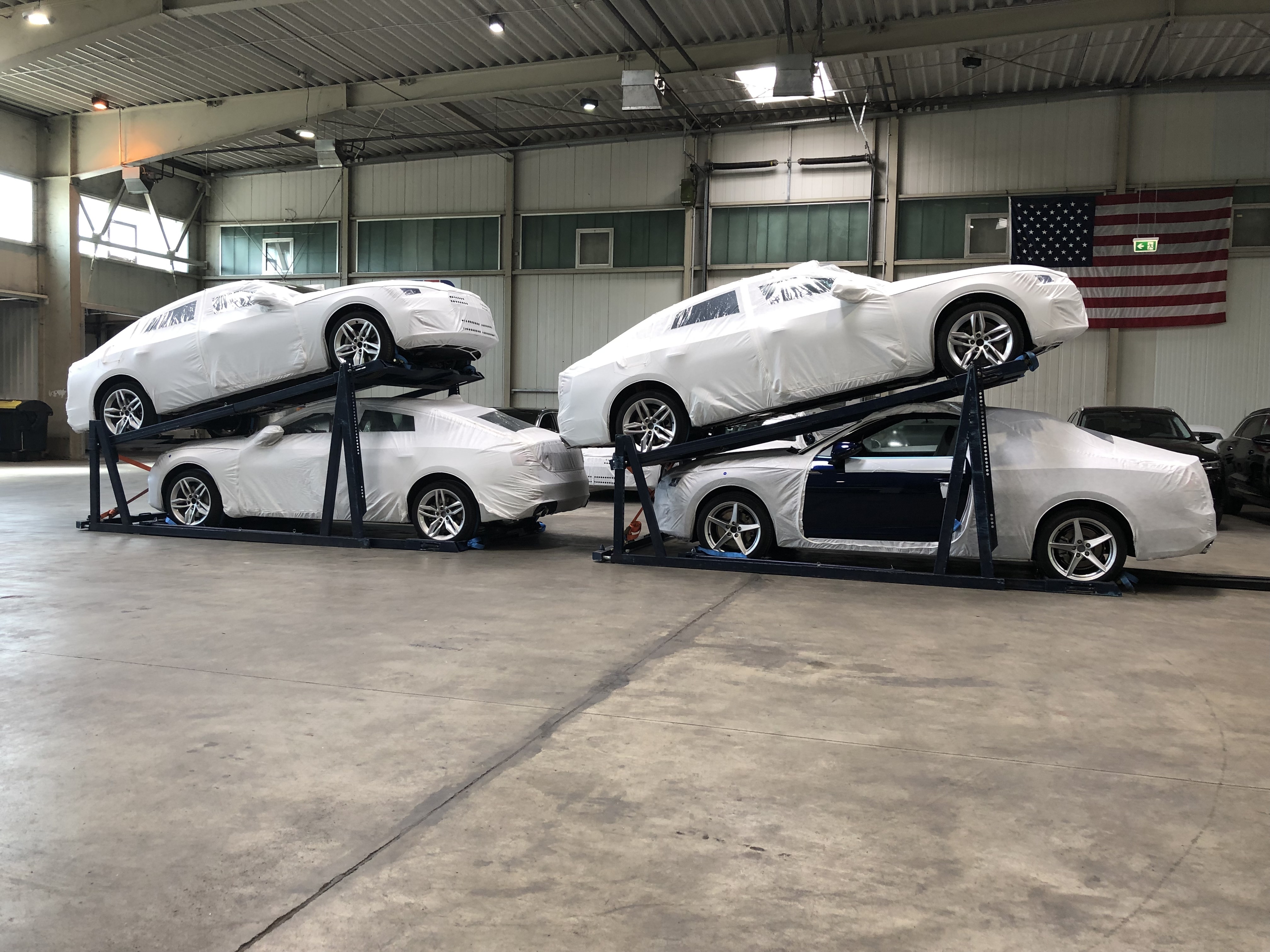
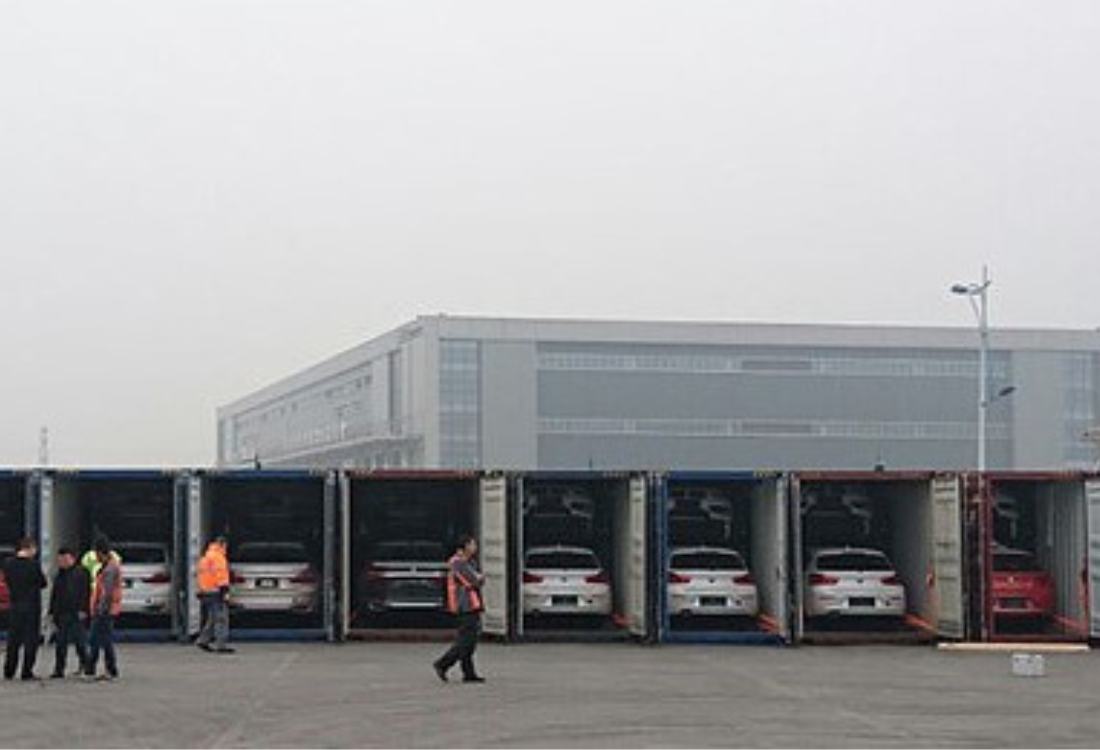
In the context of automotive logistics, a car racking system is a modular framework used to securely load, position, and transport multiple vehicles within a shipping container. The systems are used to maximise space, prevent vehicle movements during transit, and reduce the risk of damage by fixing each car into a stable, angled, or elevated position. Modern racking systems, such as the R-RAK from Trans-Rak, also support faster loading procedures and lower carbon intensity per vehicle, directly contributing to Net-Zero KPIs.
As discussed, these Net-Zero goals are no longer the exclusive preserve of individual companies. Shipping choices are under more scrutiny than ever, with the decision between using a vehicle container or opting for roll on roll offcar shipping now carry profound environmental, financial, and regulatory implications. Trends from the last couple of years suggest that container shipping is now ‘the norm’ for some high-value and electric vehicle segments, even as Ro-Ro continues to dominate high-volume flows.
The numbers behind the shift
The 2025-2035 European Market Report from Automotive Logistics revealed that volumes have fallen by more than 3 million units compared to 2019 levels. Lower production, shifting trade routes, and the rise of regional assembly hubs have all reshaped vehicle flows across the continent. At the same time, decarbonisation efforts continue to accelerate. CEVA Logistics’ 2025 expansion of its electric lorry fleet, cutting around 38,000 tonnes of CO2 annually, illustrates the scale of change expected across the entire ecosystem. These developments inevitably ripple outwards, influencing how ports, carriers, and finished vehicle transporters structure their own operations.
The impact of trade volatility
Net-Zero isn’t the only challenge affecting global logistics ecosystems. There is also the significant issue of trade uncertainty. It’s taken a sharp eye and close attention to keep track of all the trade shifts impacting global trade this year, and this is unlikely to change for the duration of US President Trump’s tenure in office. Earlier this year, thousands of vehicles sat idle at Antwerp-Bruges as tariff charges dampened US bound exports from the EU. Figures released by the port showed a 15.9% drop in the transport of new passenger cars and vans to the USA in the first six months of 2025, and in July the port authority described the site as “effectively a storage facility”.
These fluctuations reinforce the value of flexible loading systems, adaptable racking equipment, and diversified shipping options. Companies with the agility to adjust quickly (e.g. switching between vehicle container flows and Ro-Ro capacity) can better withstand sudden market shocks. And in Net-Zero terms, better racking, smarter loading, and improved utilisation directly reduce the environmental footprint per shipped vehicle.
Next steps for the sector
For individual businesses, engaging with the wider logistics ecosystem is now a central part of long-term competitiveness. Greater collaboration between stakeholders, participation in port-side decarbonisation initiatives, and closer partnerships with shipping lines on emissions-transparent services are all part of this. However, the most successful operators are those who’ve been able to embed sustainability into every part of their offering, using Net-Zero as a new framework for how automotive logistics could operate. These businesses have the potential to become leaders in a changing global logistics network.
What next?
Our car racking systems are designed to help you increase efficiency and flexibility on all international car shipping routes. To find out more, please contact Trans Rak today by clicking here.