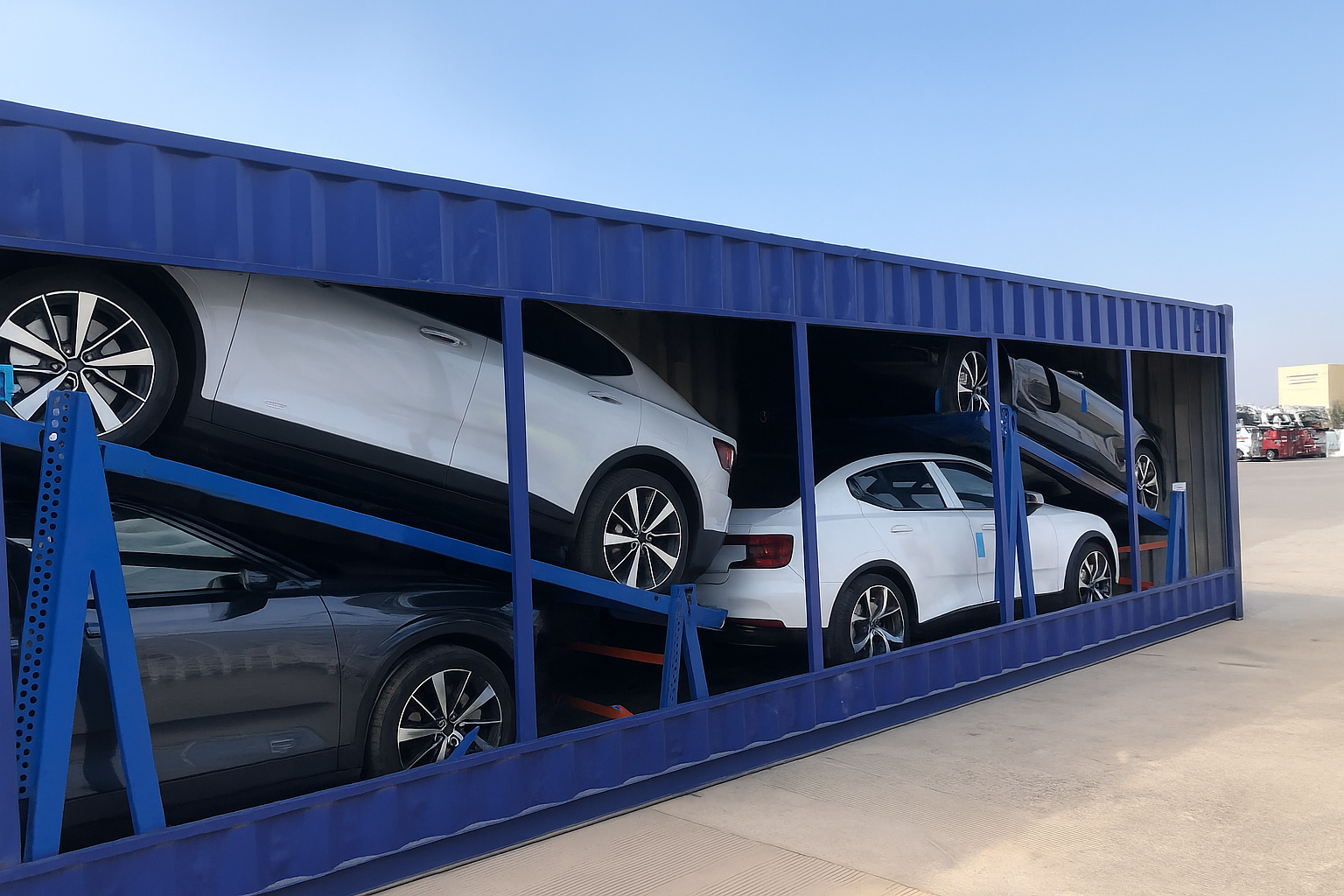
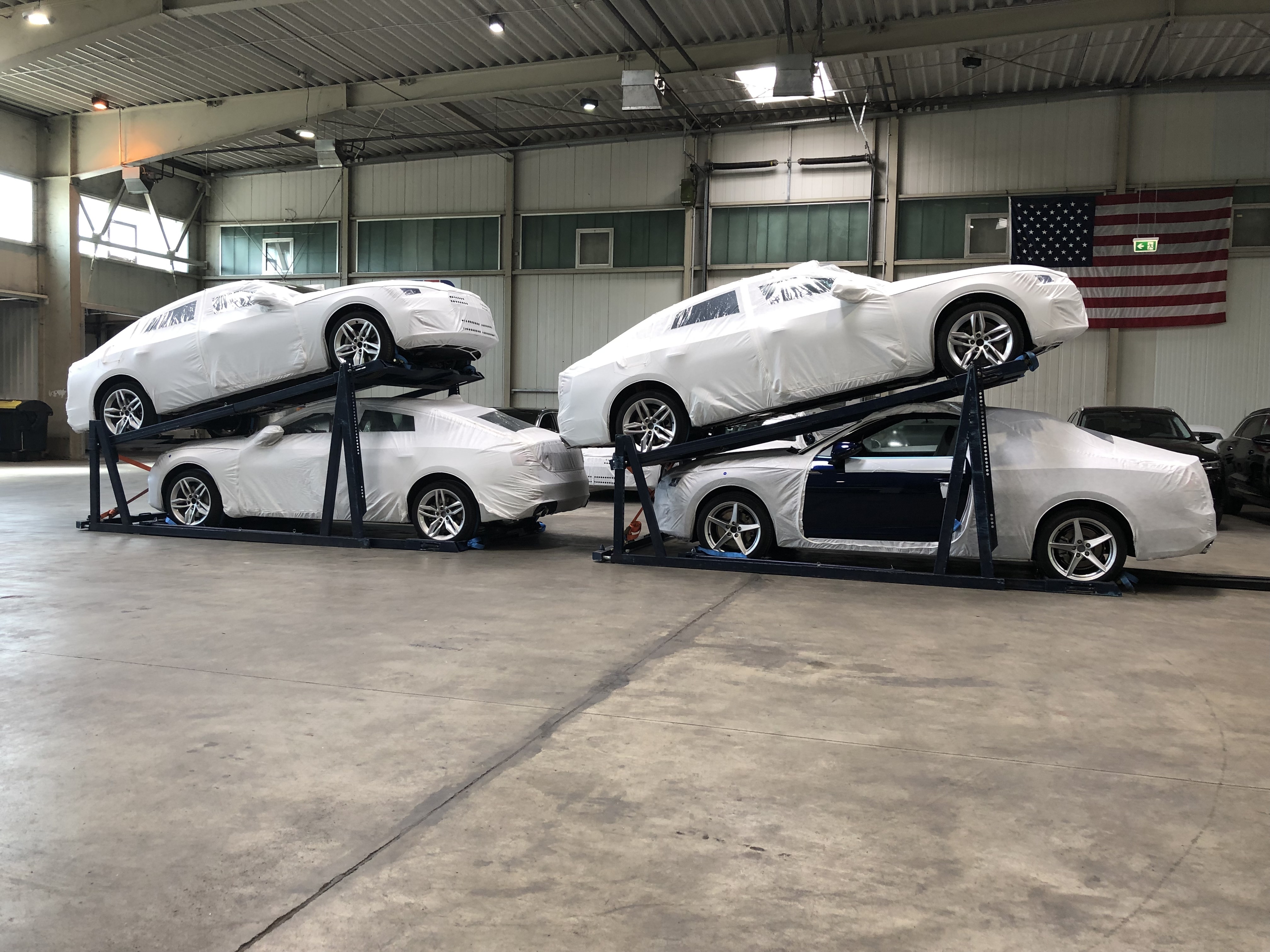
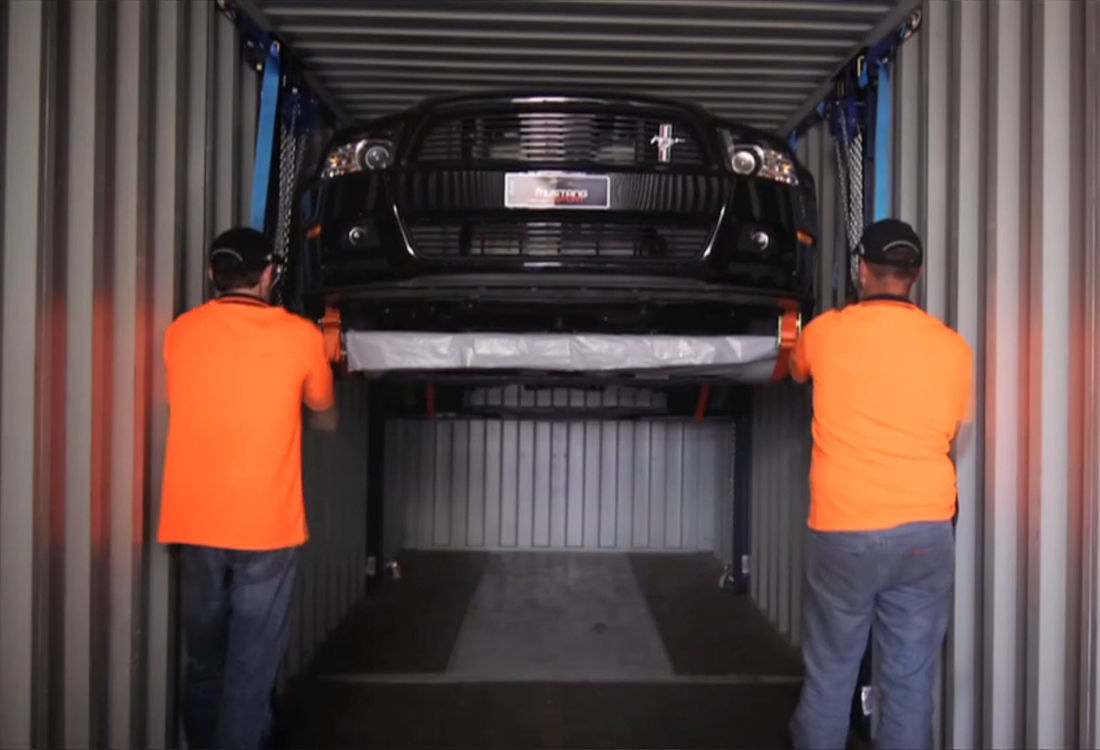
 For decades, Ro-Ro (roll-on/roll-off) vessels were the gold standard for exporting new vehicles from manufacturing hubs to foreign markets. Their large carrying capacity, drive on drive off simplicity, and long-established shipping routes made Ro-Ro the intuitive model for OEMs scaling into new markets. However, over the last two decades, global distribution patterns have been changing. Production regions are evolving, for one, and modern shipping networks are also more decentralised. This puts OEMs under pressure to improve their flexibility and cost per unit, accelerating the trend towards containerised vehicle logistics.

Containerisation allows vehicles to move through the same intermodal network as general freight. Unlike RoRo, containerisation is not tied to deep-sea terminals or dedicated shipping schedules. This change alone has strategic implications for cost, responsiveness and market reach. Let’s look at the main factors driving the shift to containerised car transport.
Network flexibility and port options
Roll on roll off ferries require specialist berths and port infrastructure, which means that many Ro-Ro routes bypass smaller developing markets entirely. By contrast, a containerised transport approach allows OEMs and their transport partners to ship into any port capable of handling ISO containers. This allows greater access to secondary and emerging markets, increases route agility to avoid congestion or disruption, and also lowers inland road transport costs by landing cargoes closer to their final markets. While Ro-Ro involves fixed schedules and large volume drops per arrival, containerised car transport can scale gradually and route dynamically.
Production fragmentation and mixed SKU demand
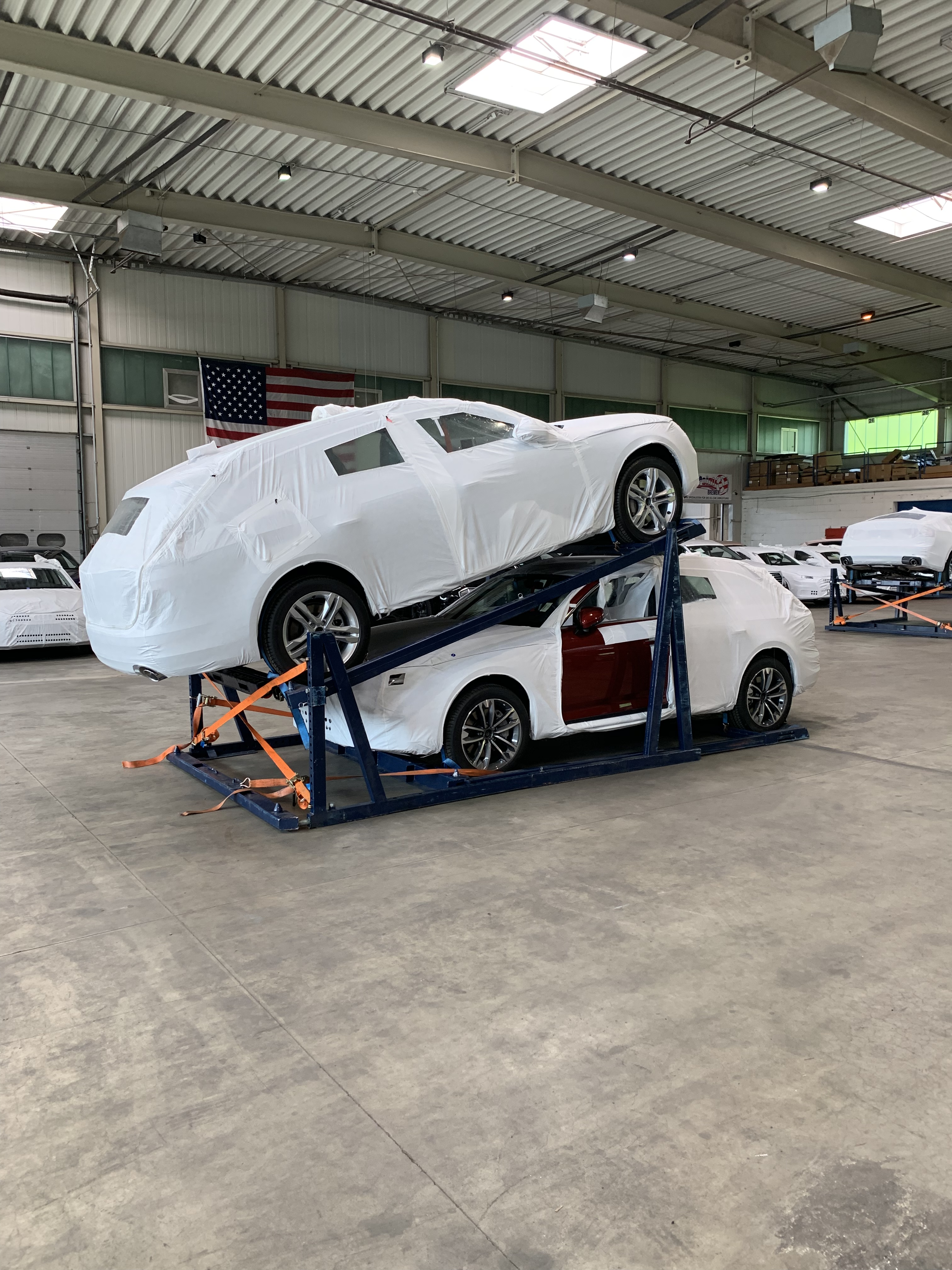
Not only logistics patterns, but also vehicle build strategies are shifting. Instead of sending large batches of identical vehicles, transporters are increasingly faced with multi-SKU export programmes – including varied trim levels and region-specific packages within the same shipment. Containerisation handles these mixed consignments more gracefully than Ro-Ro, because vehicle bodies can be shipped in smaller, more frequent lots rather than waiting to fill arbitrary vessel quotas. Multi-purpose automotive racking systems also enable transporters to load different sizes of commercial units within the same equipment pool; a significant advantage for brands scaling into new regions without predictable volume density.
Risk diversification and supply chain resilience
The Pandemic, Ukraine War, and subsequent supply chain volatility have highlighted the fragility of single-mode logistics systems. In the wake of these disruptions, Ro-Ro capacity restraints and blank sailings left many exporters exposed. Containerisation offers a modular alternative; if one carrier cancels a sailing, the shipment can simply be rebooked with another, or rerouted inland via road or rail without repacking. Standardisation is the key advantage here: containerised vehicle logistics plugs directly into the global freight infrastructure. Vessels, terminals, depots and rail connections are interchangeable and interoperable, reducing your dependency on Ro-Ro lanes.
Upstream and downstream integration
Containerisation doesn’t just increase the efficiency of ocean freight. It also improves flow at either end of the supply chain. For example, vehicles can be shipped closer to their inland distribution hubs, potentially bypassing congested coastal terminals altogether. At their origin, OEMs can align container loading with plant production schedules, smoothing the dispatch process rather than stockpiling units awaiting vessel allocation.
The multipurpose automotive racking systems used in containerised car transport allow denser loading patterns than Ro-Ro, too, enabling manufacturers to synchronise their production output with shipment cadence, and shortening their time to market.
What next?
The shift away from Ro-Ro is not a replacement of one system with another, but is more of a structural realignment driven by the needs of flexibility, market access, and risk mitigation. To find out more about containerised vehicle logistics and how our racking systems can support your operation, please contact Trans-Rak today by clicking here.