The global automotive sector is undergoing one of its biggest structural changes in decades. As OEMs respond to geopolitical risks, the challenge of volatile shipping lanes, tariff uncertainty, and pressure to shorten supply chains, a growing number are shifting production closer to their key markets. This ‘nearshoring’ trend is beginning to redraw the flow of finished vehicles across the world, and is already influencing how transport operators plan for the next generation of logistics. For businesses involved in international car shipping, the routes, hubs, and even the equipment requirements of the next decade might look very different from those of the last.

Production is moving closer to customers
Over the past couple of years, several major OEMs and emerging manufacturers have expanded or announced facilities within Europe rather than relying on long-distance imports. These include the new electric car manufacturing plant announced by Chinese EV manufacturer BYD in Szeged, Hungary – the electric car giant’s first in Europe. At the same time, Tesla has been scaling up production capacity in its ‘gigafactory’ in Grünheide, Germany, with plans for further expansion. The site now serves European demand more directly instead of relying on US shipments. Central and Eastern Europe have become hotspots of this new trend, offering international OEMs competitive labour, lower energy costs, and shorter transit times to high-volume markets such as Germany, France, the UK and the Nordics.
At the same time, some Chinese and Korean OEMs are investing directly in European assembly plants to support EV adoption and reduce exposure to tariff changes in Far Eastern markets. This localisation shift isn’t just a manufacturing change. It is also reshaping the outbound logistics ecosystem that connects factories to ports, hubs, and dealerships throughout the world.
Shorter, denser transport corridors are emerging
For UK-based automotive transport businesses, nearshoring is also creating new transport patterns across Europe. These include:
-
Additional road and rail corridors connecting regional production hubs
-
Greater reliance on short sea routes from the continent into the UK
-
Higher frequency of cross-border road and rail movements within Europe
-
Increased use of containerised movement where greater flexibility is required.
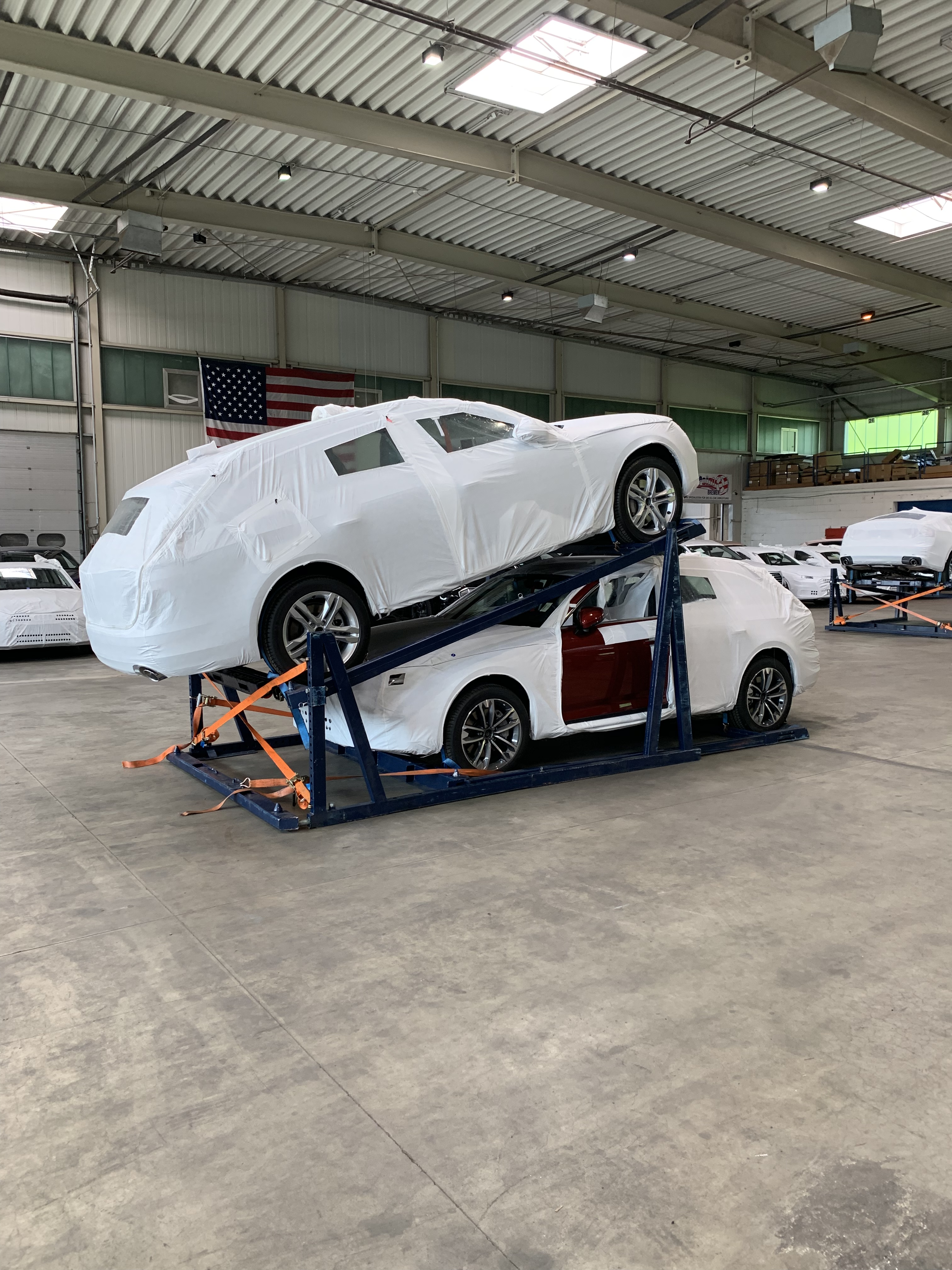
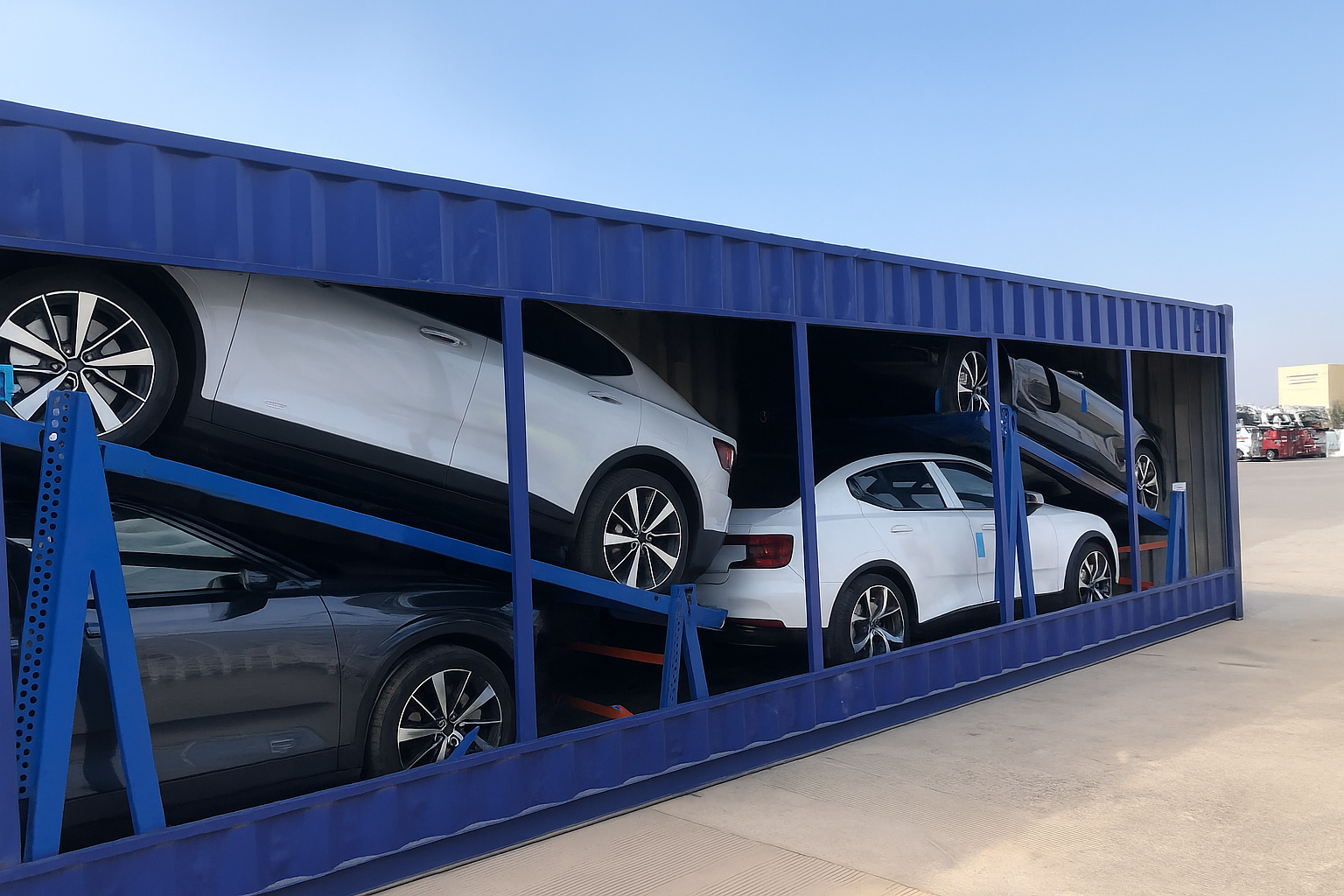
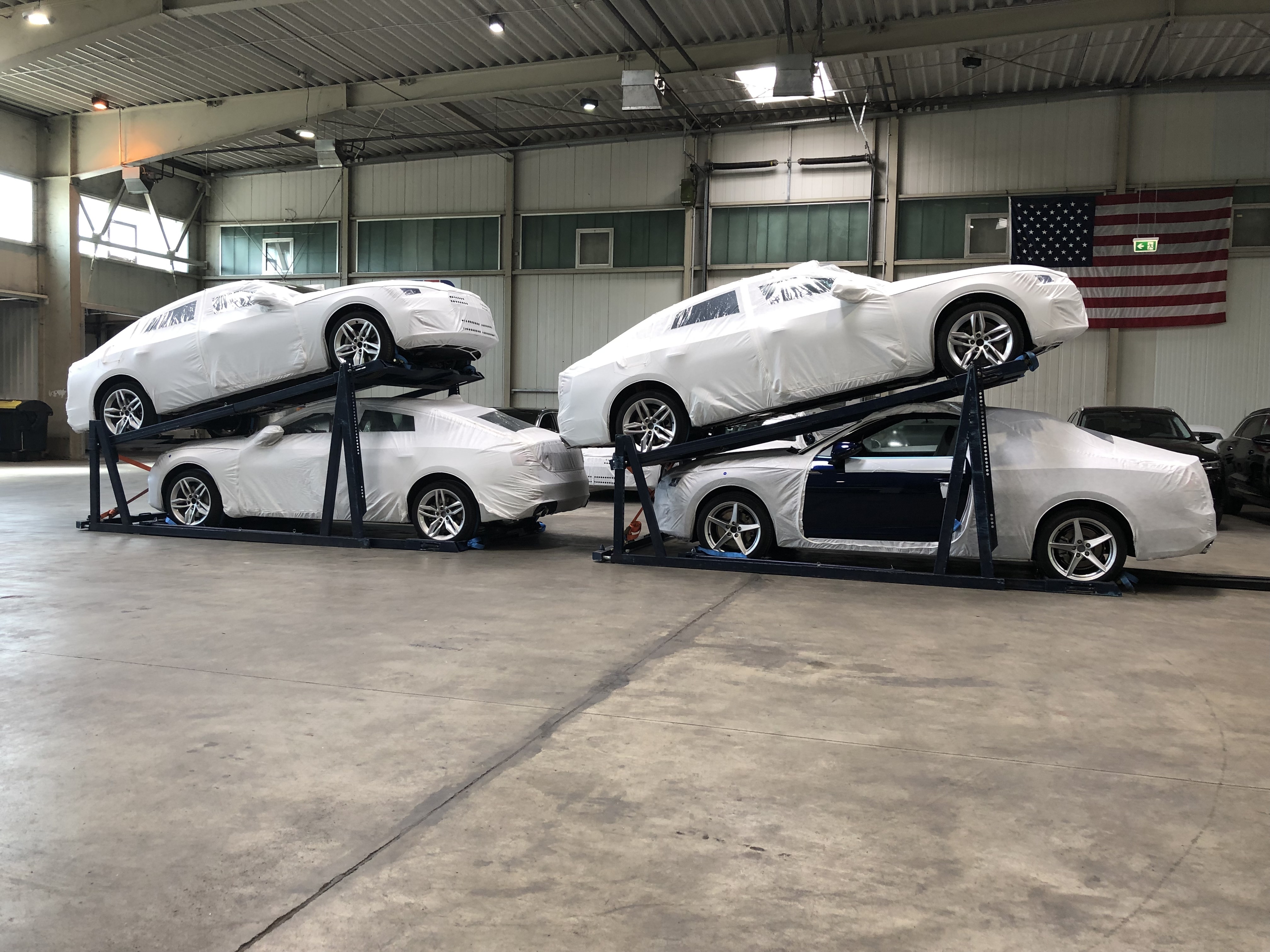
This rise in container-based flows has also renewed focus on how many cars go in a container; a question increasingly answered by modern multi-vehicle racking solutions that maximise density while protecting vehicle quality. Systems such as our R-RAK, designed specifically for secure container loading, are being used more widely as OEMs look for scalable, intermodal methods to move mixed fleets.
Electric vehicle assembly growth adds further complexity to the landscape
Near shoring has also dovetailed with the rapid expansion of EV production, as electric vehicles introduce new requirements into global outbound logistics networks. In particular, heavier vehicles reduce payload capacity for traditional transport mediums, and battery safety protocols influence spacing and handling procedures. These demands are driving some OEMs and logistics providers to adopt more flexible containerised racking technologies that can support both EVs and ICE (internal combustion engine) models. Modular platforms like the R-RAK allow operators to load a more consistent number of units safely into any shipping container, regardless of vehicle type.
What next?
If you are concerned about the challenges facing UK vehicle logistics providers and are interested in the benefits of containerised shipping, please contact Trans-Rak today for a free discussion of your needs.