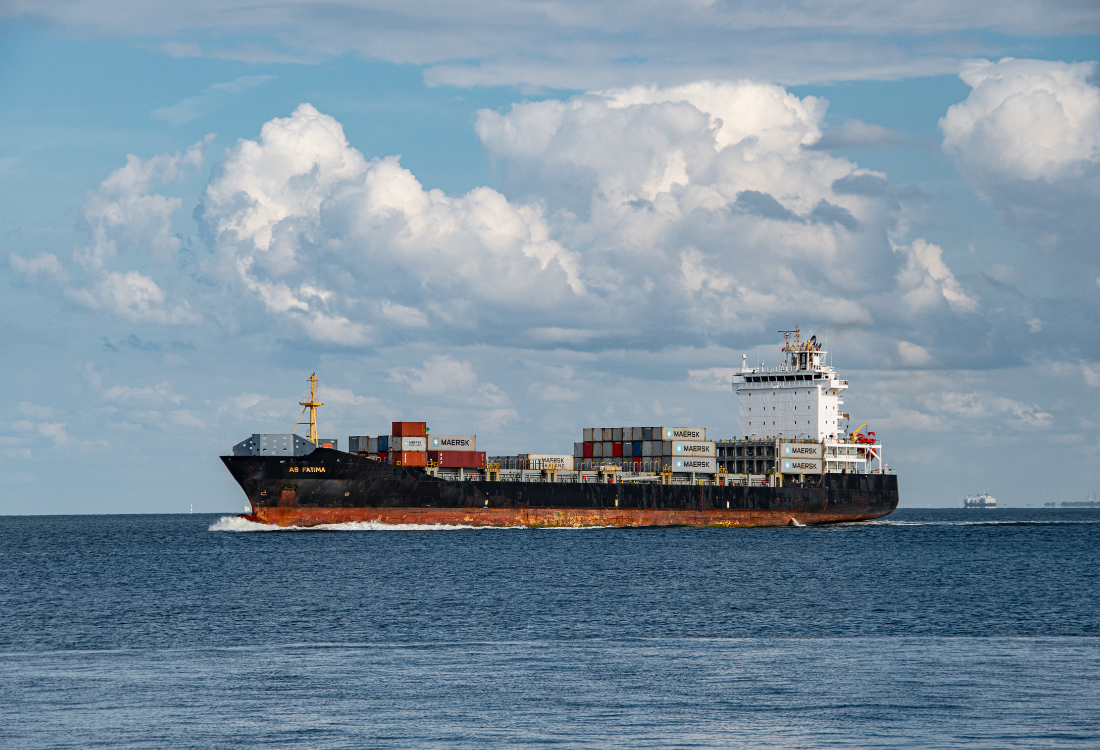
When the International Maritime Organisation (IMO) enforced a major fuel reform in 2020, most industry stakeholders hailed it as a milestone in sustainable maritime trade. By cutting sulphur content in marine fuels from 3.5% to 0.5%, the rule sharply reduced toxic emissions on the world’s major sea lanes: a landmark win for air quality and human health.
Five years on, however, climate researchers are uncovering a paradox: cleaner shipping fuels may actually be accelerating ocean warming. For an industry built on efficiency and environmental responsibility, this development has implications that reach beyond the engine room.

A change in the atmosphere
Sulphur dioxide (SO₂) pollution from containerships once played an unintended climate preservation role. When released into the air from ship exhausts, SO₂ particles form aerosols that increase cloud reflectivity, bouncing solar radiation back into space and creating a subtle cooling effect over busy sea lanes. However, as these emissions plummeted under the new regulations, that cooling mask faded, the result being measurable increases in ocean surface temperatures along several major shipping corridors – including routes critical to international car shipping between Europe, Asia, and North America.
The IMO’s regulations are still a net positive for public health, especially around busy ports and coastal communities. However, the unintended side effects do highlight the complex interdependence between environmental reform, well-intentioned sustainability drives, atmospheric science, and the infrastructure that underpins global shipping.
Climate risks and to the supply chain
For the automotive transport sector, warmer seas are more than an abstract concern. Elevated ocean temperatures are directly linked to extreme weather patterns, including storms and heatwaves, and can also disrupt port operations by increasing the risk of coastal floods. These factors can impact vessel turnaround times and the scheduling of vehicle movements, not to mention their destructive effect on local economies and ecosystems.
Ports from Pernambuco to Southampton are already reporting more frequent heat-related service delays, while maritime insurers are recalibrating climate-linked premiums. As manufacturers and logistics providers work to decarbonise, they must also grapple with the new physical risks tied to the same environmental goals. It’s a classic Catch-22 situation.
Sustainability beyond the hull
The transition to lower sulphur fuels is one part of the decarbonisation puzzle for the logistics sector. The same forces driving this reform, such as tightening emission standards by governments and stakeholder expectations, are now transforming land-based logistics too. For providers of vehicle transport solutions, the lesson is clear: sustainability cannot be treated as a single-issue target. The next few years will demand a more integrated approach that weighs regulatory compliance, operational resilience, and climate adaptation in equal measure. For the best results, ‘green’ technologies and processes should not be viewed in isolation; greener container fleets, racking systems, science-based sustainability policies, and predictive planning tools are all important factors in managing environmental volatility from sea to shore.
Turning complexity into a competitive advantage
In a global automotive environment shaped by carbon caps, port electrification, and volatile temperature patterns, resilience has become a strategic asset. The companies that thrive in the coming decade will be those that treat climate forecasting as part of their logistics strategy, and not as an afterthought. As the shipping sector proves, every environmental intervention has ripple effects – some of them dramatic and unintentional. For the automotive transport industry to stay ahead of those ripples, it will need a logistics network capable of remaining efficient, adaptable, and agile in a warming world
Next steps
Trans-Rak are one of the world’s leading producers of modular steel racking systems for automotive transport. To find out about our solutions, please contact our technical sales team today by clicking here, or call us directly on +44 1926 40 82 82.