.jpg?width=1689&height=931&name=phonto%20(11).jpg)
When businesses look at the cost of shipping vehicles internationally, they often focus on freight rates, customs charges and port fees. But there is another cost that is easy to overlook: paying to transport unused container space.
Every partially loaded container increases the effective cost of transporting each vehicle. Whether shipping cars, vans, specialist vehicles or SKD bodies, failing to make full use of available capacity can affect profitability, sustainability and overall supply chain efficiency.
At Trans-Rak, we have spent nearly three decades helping vehicle exporters, freight forwarders and logistics providers make better use of container capacity. Time and again, we see opportunities to transport more vehicles within the same container footprint, reducing the cost and complexity of international vehicle shipping.
The Cost of Paying for Empty Air
A shipping container costs virtually the same to move whether it is fully utilised or only partially loaded.
If a container has the capacity to transport four vehicles but only carries two, the freight cost per vehicle immediately increases. Across multiple shipments, these additional costs can quickly accumulate, reducing margins and making international vehicle transport less competitive.
Many businesses assume they are already making full use of their containers. However, when Trans-Rak assesses loading operations, we often identify opportunities to increase vehicle capacity through improved loading configurations and vehicle racking solutions.
For exporters and logistics providers handling large volumes, even small improvements in container utilisation can result in substantial annual savings.
A Lower Return on Freight Spend
Freight costs are often one of the largest expenses in the vehicle export process. Transporting more vehicles per container spreads those costs across more units, reducing the effective transport cost per vehicle.
This becomes particularly important when freight rates rise or market conditions become more challenging. Businesses that can transport more vehicles within the same container footprint are often better positioned to remain competitive.
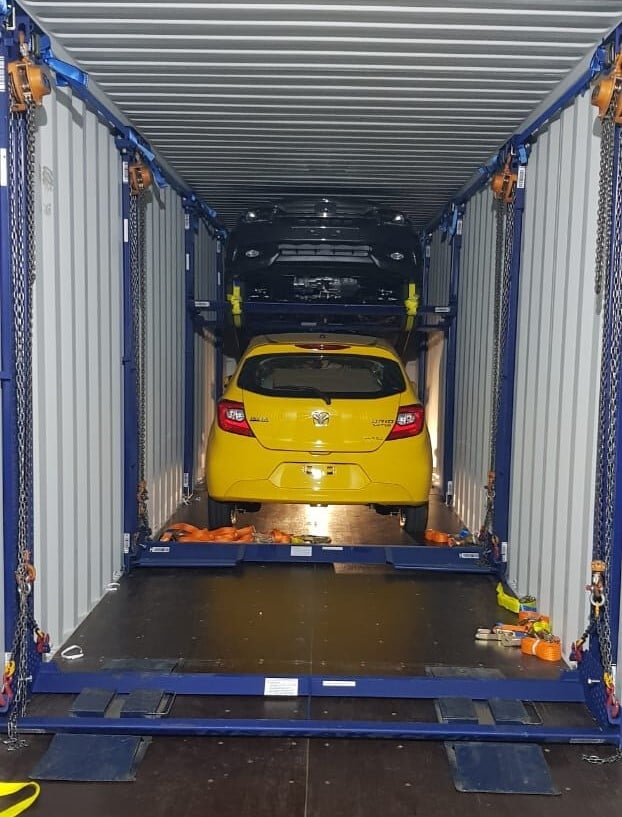
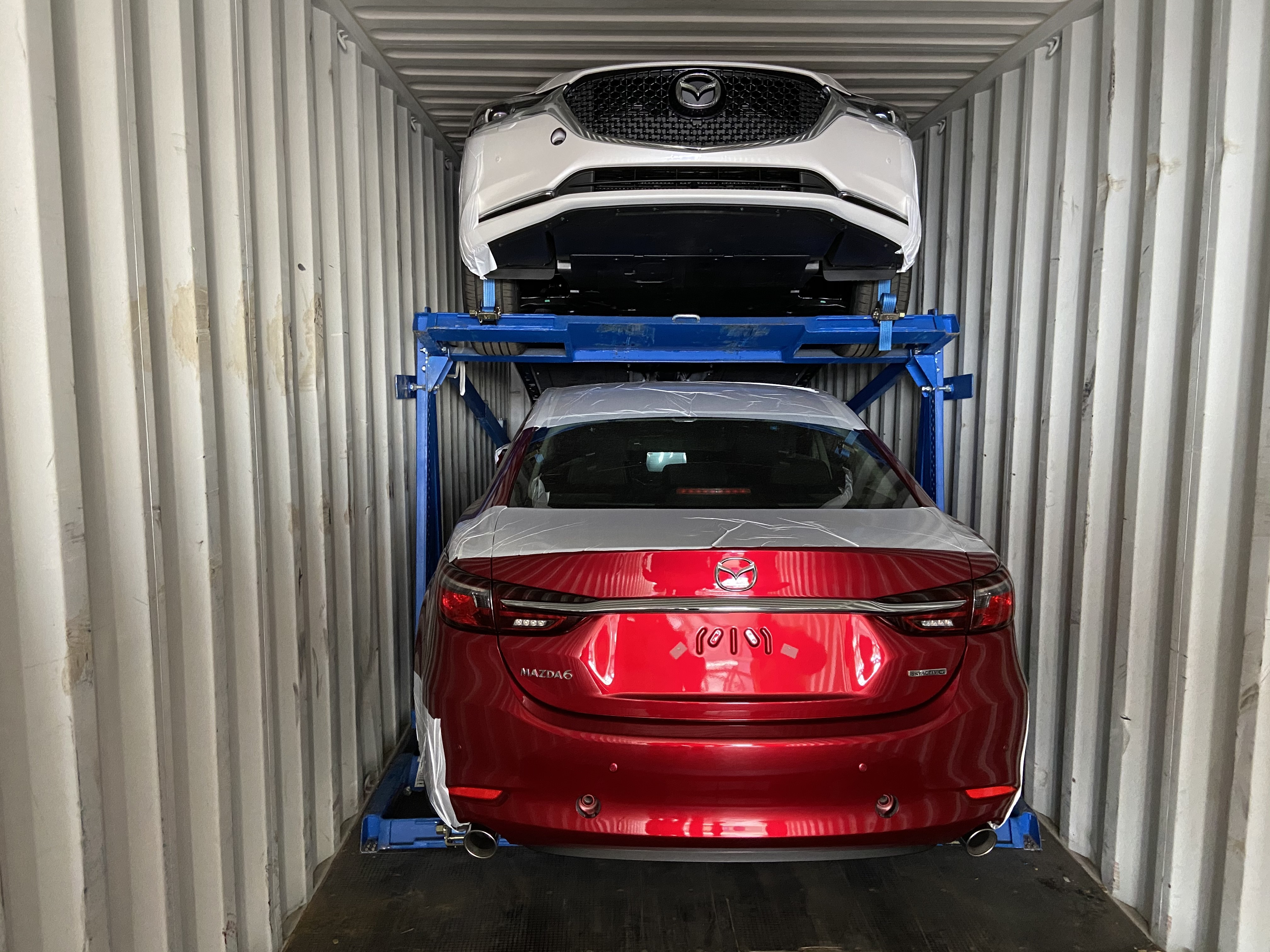
Trans-Rak's vehicle racking systems are designed specifically to make better use of the available space within standard shipping containers, allowing more vehicles to be transported safely and efficiently without increasing the number of containers required.
Increased Environmental Impact
Container space utilisation is not only a financial issue; it is also a sustainability issue.
Every shipment generates emissions through road transport, port operations and ocean freight. When containers are not fully utilised, the carbon footprint associated with each vehicle transported increases.
By increasing the number of vehicles loaded into each container, businesses can reduce emissions per vehicle and improve the overall environmental efficiency of their supply chains.
At Trans-Rak, we frequently work with customers looking to reduce both costs and environmental impact. Improving container utilisation can be one of the quickest and most practical ways to achieve both objectives simultaneously.
More Containers, More Complexity
Transporting fewer vehicles per container often means shipping more containers overall to move the same volume of cargo.
This can lead to:
- Increased handling costs
- Additional documentation requirements
- More customs clearances
- Greater storage requirements
- Higher administration costs
- Increased risk of delays
Each additional container introduces another point of coordination within the supply chain. Improving container utilisation can help streamline operations and reduce unnecessary complexity.
By increasing the number of vehicles that can be safely transported within a single container, Trans-Rak customers can simplify logistics operations while reducing overall shipping costs.
Why Vehicle Dimensions Matter
One reason containers are sometimes underutilised is that loading plans fail to account for the specific dimensions of the vehicles being transported.
Factors such as:
- Vehicle length, height and shape
- Wheelbase
- Weight distribution
- Ground clearance
can all influence how efficiently vehicles can be positioned within a container.
At Trans-Rak, every loading solution is designed with these variables in mind. Our team works closely with customers to assess vehicle dimensions and identify the most effective racking configuration for their requirements.
Careful planning, combined with the right equipment, can unlock valuable container capacity that would otherwise remain unused.
The Role of Vehicle Racking Systems
Modern vehicle racking systems are designed to maximise the use of available container space while maintaining vehicle safety and security.
As one of the world's leading manufacturers of vehicle container racking systems, Trans-Rak has helped customers across the globe improve container utilisation for nearly three decades.
Trans-Rak systems maximise available container space, enabling more vehicles to be transported safely and efficiently while working within applicable weight limits and vehicle protection requirements.
For many customers, the result is a lower shipping cost per vehicle, improved operational efficiency and a stronger competitive position in the marketplace.
Looking Beyond Freight Rates
When evaluating shipping costs, it is easy to focus solely on the headline freight rate. However, the true cost of transport is also determined by how effectively that container space is used.
A lower freight rate on a poorly utilised container may ultimately be more expensive than a higher rate on a fully optimised shipment.
This is why many vehicle exporters are increasingly focusing on container utilisation as a key performance indicator. By reviewing loading methods and implementing proven solutions such as Trans-Rak vehicle racking systems, businesses can achieve significant efficiency gains without increasing their shipping footprint.
Conclusion
Partially empty containers may seem like a minor issue, but their impact can be substantial. Higher costs per vehicle, increased emissions and greater operational complexity can all stem from unused space that has already been paid for.
At Trans-Rak, we believe businesses should make the most of every available container. Through innovative vehicle racking systems and decades of industry expertise, we help customers maximise container capacity, reduce shipping costs and improve the efficiency of their global vehicle transport operations.
In an increasingly competitive logistics environment, making better use of the space you already have could be one of the most effective ways to improve profitability.
Want to discover how many vehicles you could fit into your containers? Contact the Trans-Rak team to discuss your shipping requirements and explore how improved container utilisation could reduce costs across your supply chain.
.jpg)
.jpg)