 For decades, Ro-Ro (Roll-on/Roll-off) shipping has been the traditional method for transporting vehicles internationally. Designed specifically for vehicle movements, Ro-Ro vessels have played a vital role in global automotive logistics.
However, the used vehicle export market is changing. Exporters are under increasing pressure to reduce costs, improve flexibility and reach new markets, while making the most of every shipment. As a result, containerised vehicle transport is becoming an increasingly important part of the global logistics mix.
As demand grows for flexible, smaller-volume shipments and access to emerging markets, more exporters are turning towards containerised vehicle shipping as an alternative solution.
The changing global vehicle export market
The global used vehicle trade has expanded significantly in recent years. Countries across Africa, the Middle East, Asia and emerging markets continue to demand reliable access to affordable vehicles, while exporters are increasingly looking for shipping solutions that offer flexibility and control.
Unlike traditional automotive supply chains, used vehicle exports often involve:
- Multiple vehicle specifications
- Smaller shipment quantities
- Diverse destination markets
- Variable demand patterns
This creates challenges for exporters relying solely on traditional Ro-Ro services.
Why container shipping is growing
Containerised vehicle transport offers several advantages:
- Greater flexibility - Containers can be shipped to thousands of destinations worldwide using established container networks. This allows exporters to reach markets where dedicated vehicle vessels may have limited availability.
- Improved vehicle security - Vehicles transported inside containers are protected from weather exposure, reducing risks associated with long-distance ocean transport.
- More efficient smaller shipments - Rather than waiting to fill a Ro-Ro booking, exporters can move vehicles in smaller batches according to demand.
- Access to established container infrastructure - The global container network provides extensive port coverage, inland connections and established logistics routes.
- How can we ship more vehicles without increasing transport costs?
- How do we protect valuable vehicles during transit?
- How can we reach destinations not served by regular Ro-Ro routes?
- How can we make better use of existing container networks?
The role of loading technology
One of the biggest developments supporting containerised vehicle exports has been the evolution of vehicle loading systems.
Traditional methods often relied on manual loading techniques, including wire slings and improvised supports. These methods can be labour-intensive and increase the risk of vehicle damage.
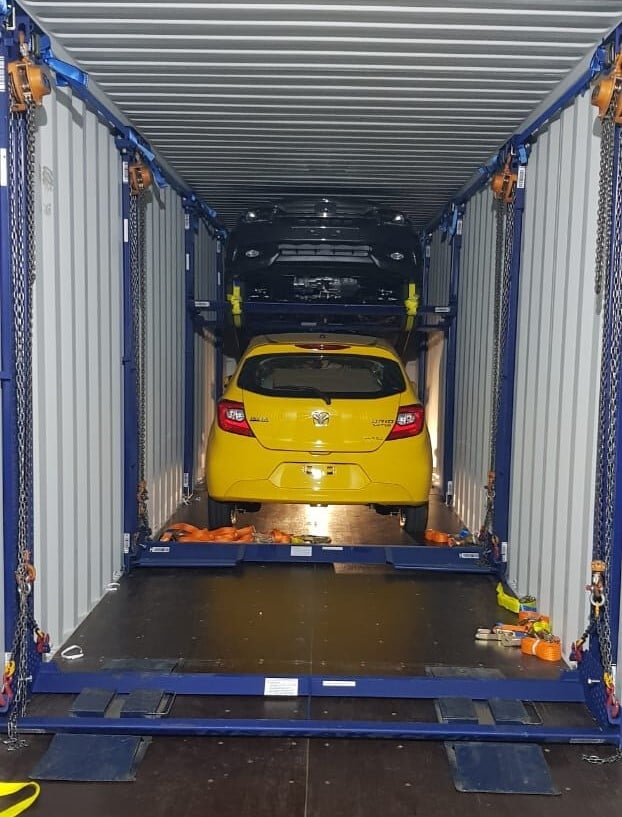
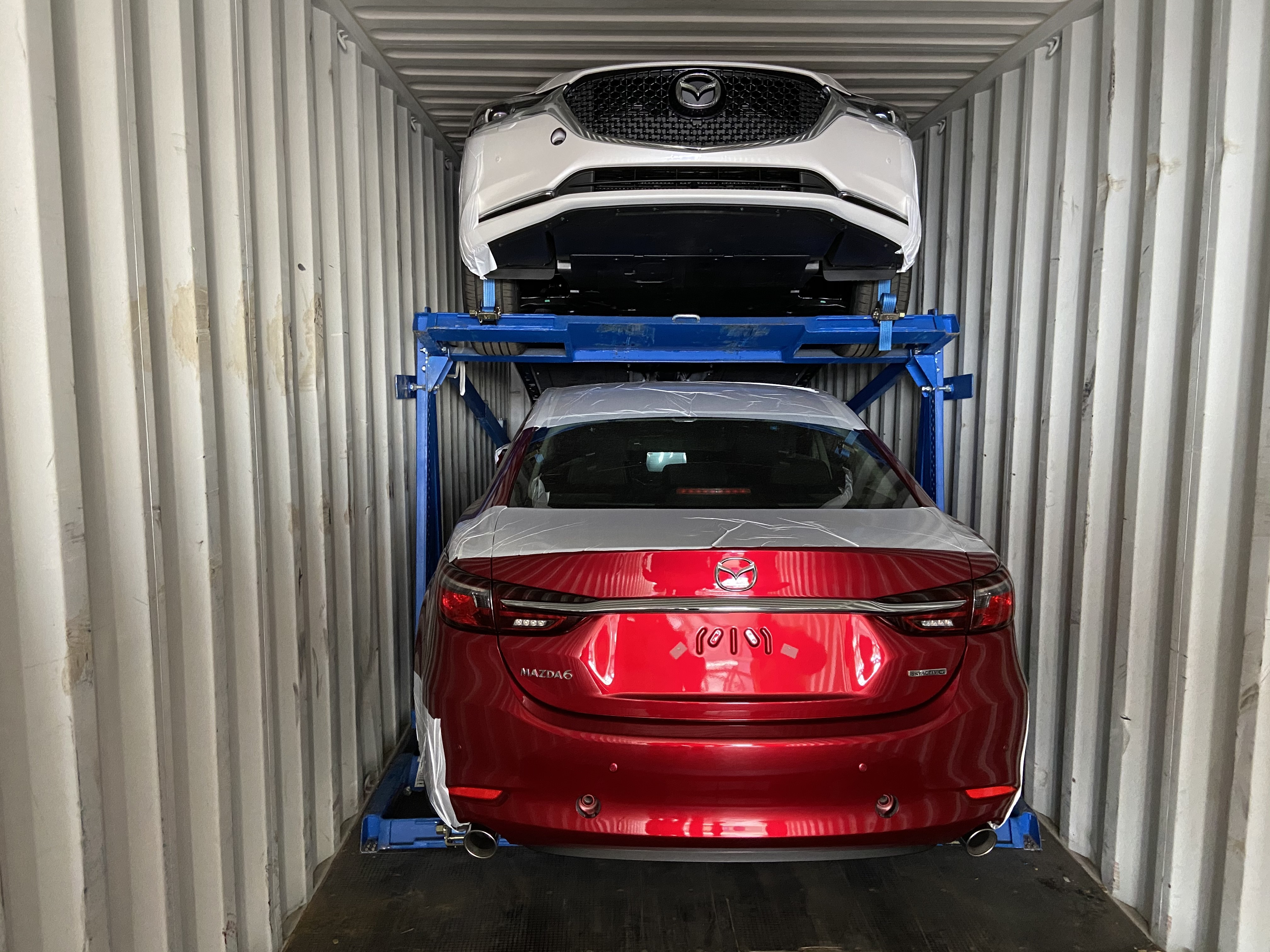
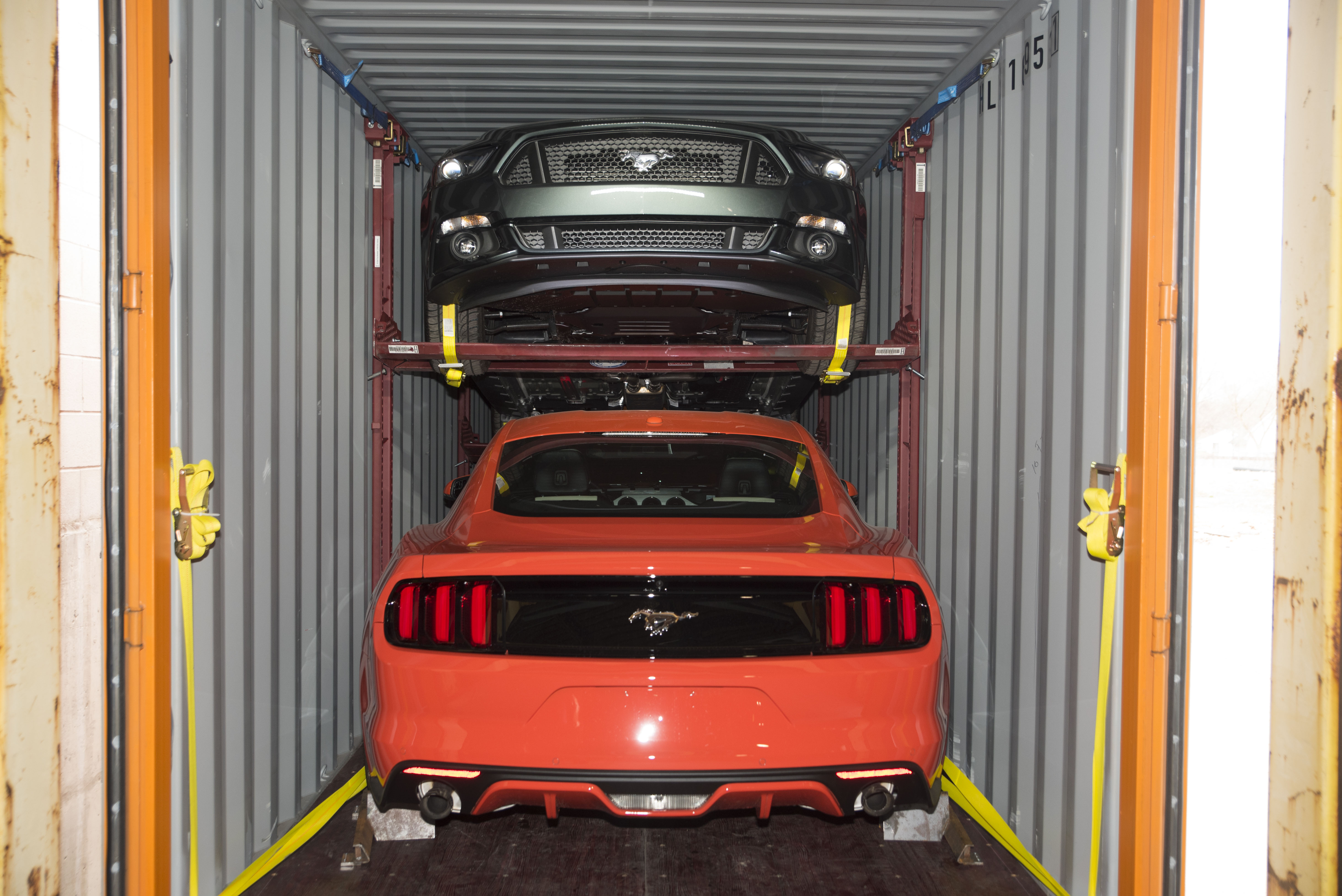
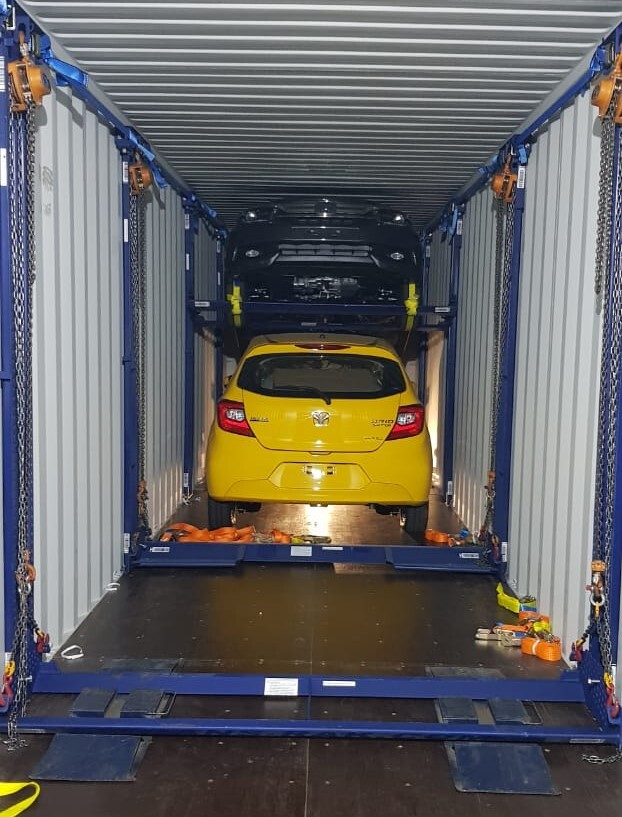
Modern engineered vehicle racking systems allow vehicles to be safely positioned inside containers, increasing capacity while improving loading speed and repeatability.
Why exporters are rethinking vehicle logistics
The decision between Ro-Ro and container shipping is no longer simply about vessel availability. Today's exporters are looking for solutions that improve efficiency across the entire supply chain.
For many businesses, that means asking questions such as:
Containerised vehicle transport provides answers to many of these challenges, particularly when combined with engineered loading systems that maximise capacity and improve operational efficiency.
The role of engineered vehicle racking
Container shipping is only as efficient as the method used to load the vehicles.
Historically, many exporters relied on improvised loading techniques using timber, wire slings or other temporary supports. While these methods can move vehicles, they often require significant manual labour, increase loading times and introduce greater risk of vehicle damage.
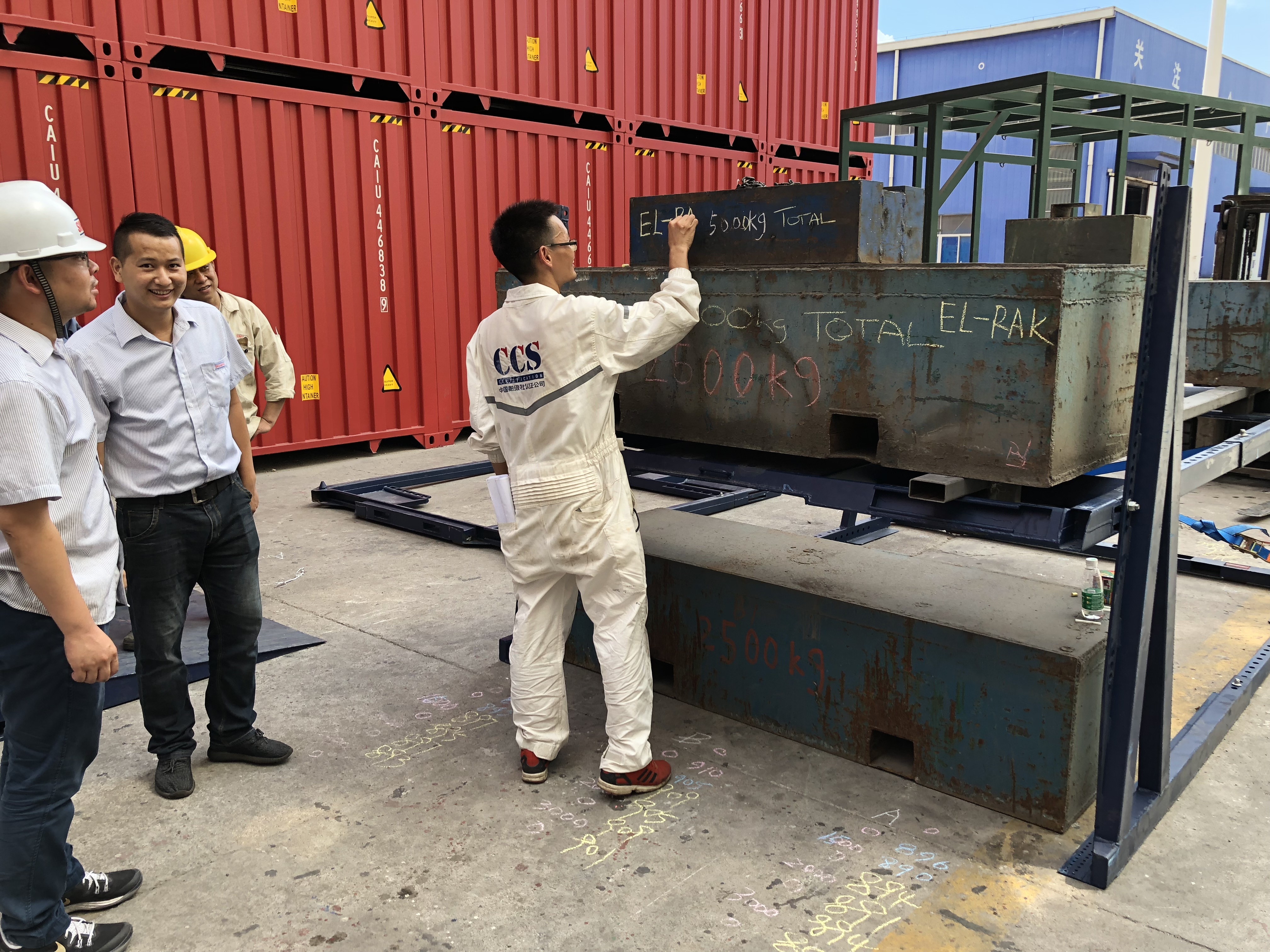
At Trans-Rak International, we've spent more than 25 years developing engineered vehicle racking systems that allow exporters, shipping lines and OEMs to maximise container utilisation safely and efficiently.
Our reusable systems enable multiple vehicles to be securely transported within standard ISO containers while delivering:
- Higher vehicle capacity
- Faster loading and unloading
- Improved vehicle protection
- Reduced labour requirements
- Long-term reusable equipment that lowers operating costs
For many exporters, the real advantage isn't simply choosing container shipping over Ro-Ro - it's making container shipping as efficient as possible.
How Trans-Rak supports modern vehicle exports
Ro-Ro shipping will continue to play a vital role in moving high volumes of vehicles around the world. However, containerised transport is becoming an increasingly valuable option for exporters seeking greater flexibility, wider market access and improved operational efficiency.
At Trans-Rak International, we work with vehicle manufacturers, shipping lines and logistics providers worldwide to help maximise the potential of containerised vehicle transport. Our reusable racking systems enable more vehicles to be shipped safely within every container, helping customers reduce costs, improve sustainability and adapt to the changing demands of global automotive logistics.
As international vehicle trade continues to evolve, the businesses that embrace smarter loading solutions alongside smarter shipping strategies will be best positioned for future success.