The continuing growth of electric vehicle (EV) exports has added a new layer of complexity to global vehicle transportation, reshaping how businesses evaluate route safety, planning strategies, and handling procedures. Unlike internal combustion engine (ICE) vehicles, EVs include engineering and safety considerations that extend beyond the cosmetic damage concerns traditionally associated with transporting cars. Battery integrity, underbody clearance, weight distribution, and consistent environmental conditions now play a central role in determining which transport methods are best suited for long-distance movements.

As the uptake of electric vehicles increases in Europe, China, North America, modular finished vehicle racking systems are emerging as one of the most predictable ways to control these risks at scale. In this article, we look at how the systems support safer, more reliable electric car transport across international supply chains.
Why EVs Require More Controlled Transport Conditions Than Ices
Electric vehicles behave differently in transit to conventional ICE cars. For example, their battery packs increase the vehicle’s overall mass (often significantly) and shift its centre of gravity. This makes EVs more sensitive to lateral forces during rail journeys, vessel motion, and road transportation. Even minor vibrations can increase stress on the battery housing, cooling components, and high-voltage cabling.
EVs are also more vulnerable to environmental risks such as:
- Moisture ingress
- Salt and chemical exposure at sea
- Extreme temperature swings
- Prolonged UV exposure at port terminals
These conditions can accelerate deterioration in the car’s battery, increase the risk of thermal runaway (a serious fire hazard), or trigger inspection flags at your destination market. Because many EVs travel thousands of miles from manufacturers in the USA, China, and South Korea before reaching their distribution networks, businesses are increasingly looking for methods that maintain a controlled and repeatable environment from start to finish.
How Finished Vehicle Racking Improves Structural Stability
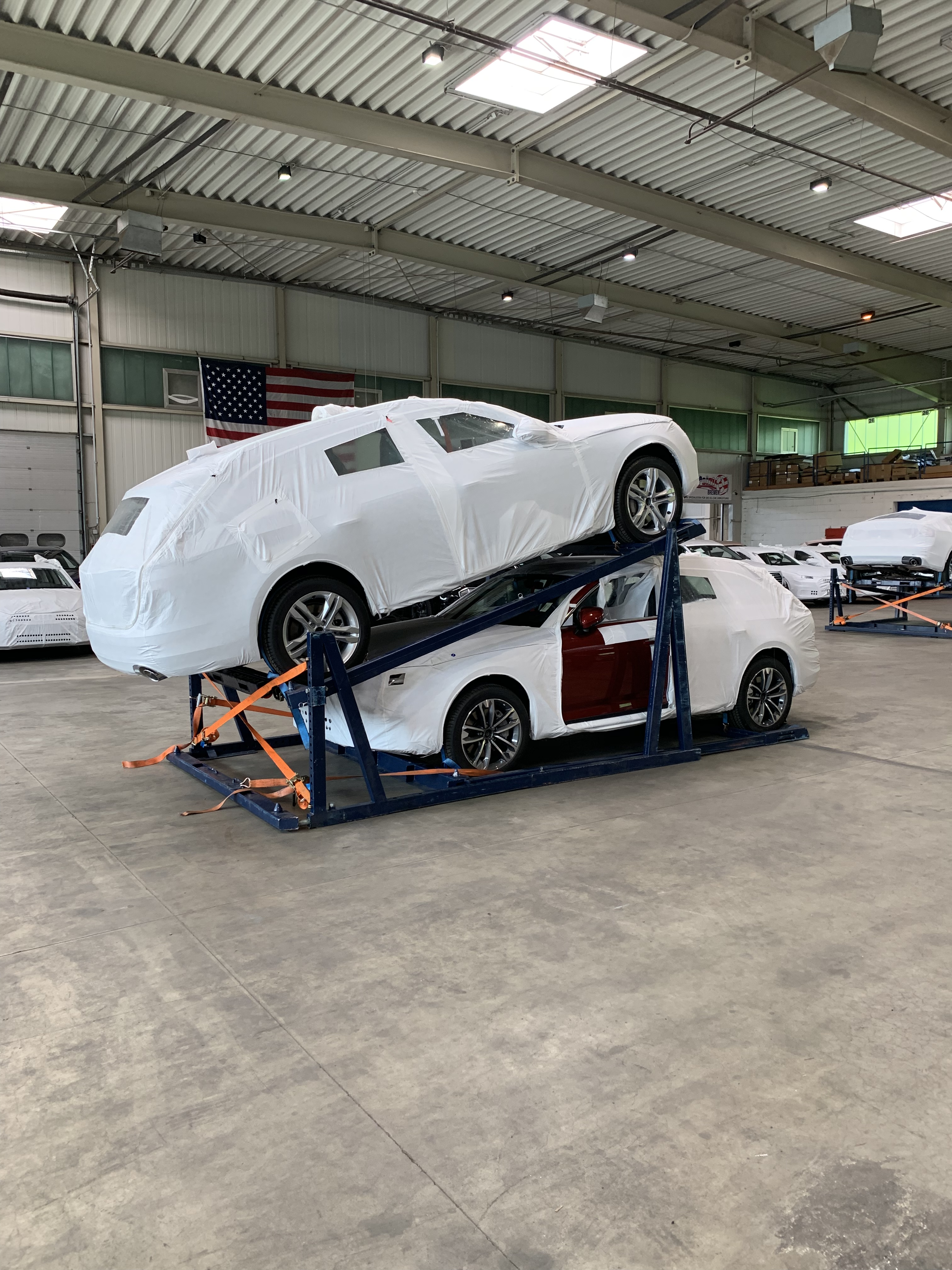
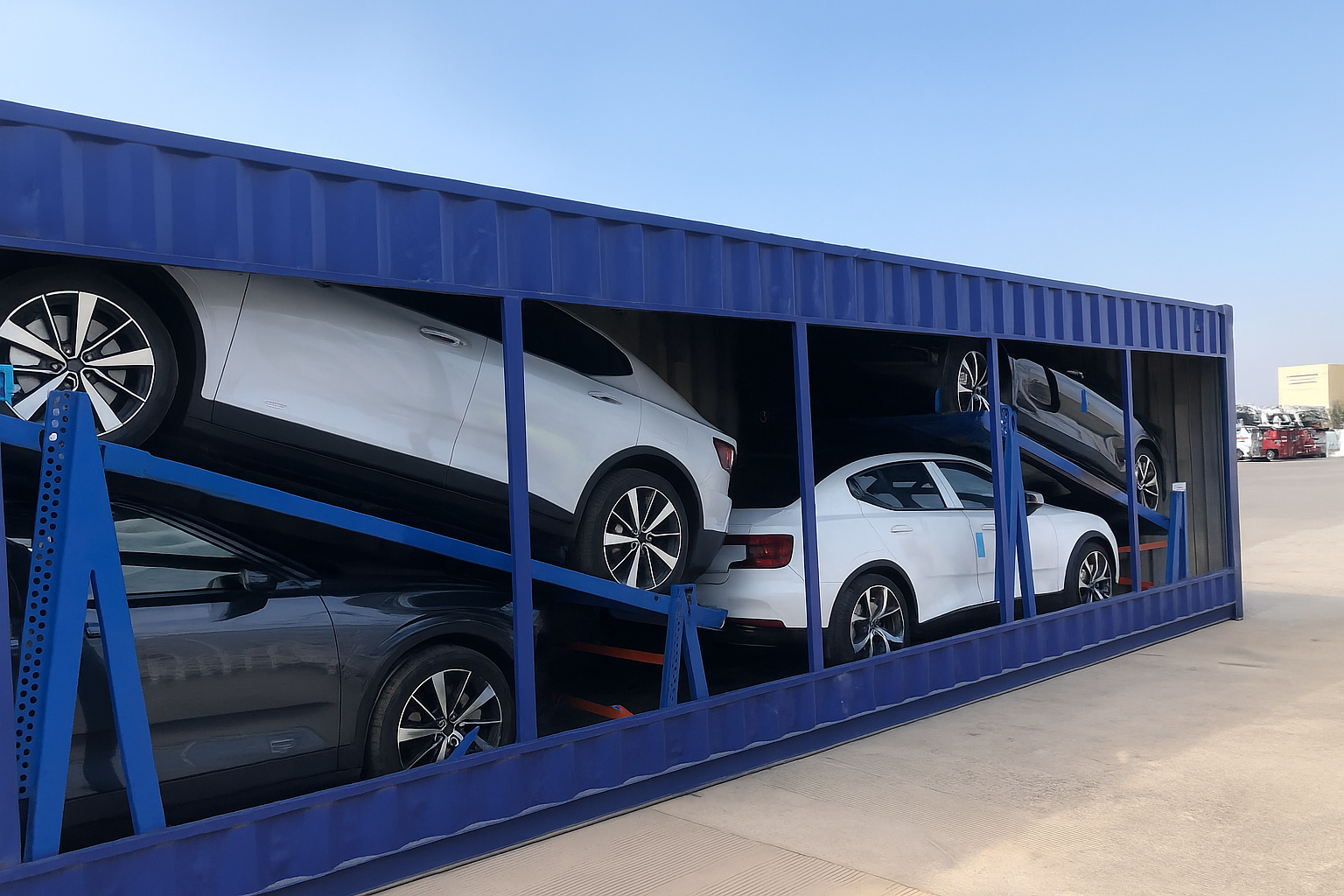
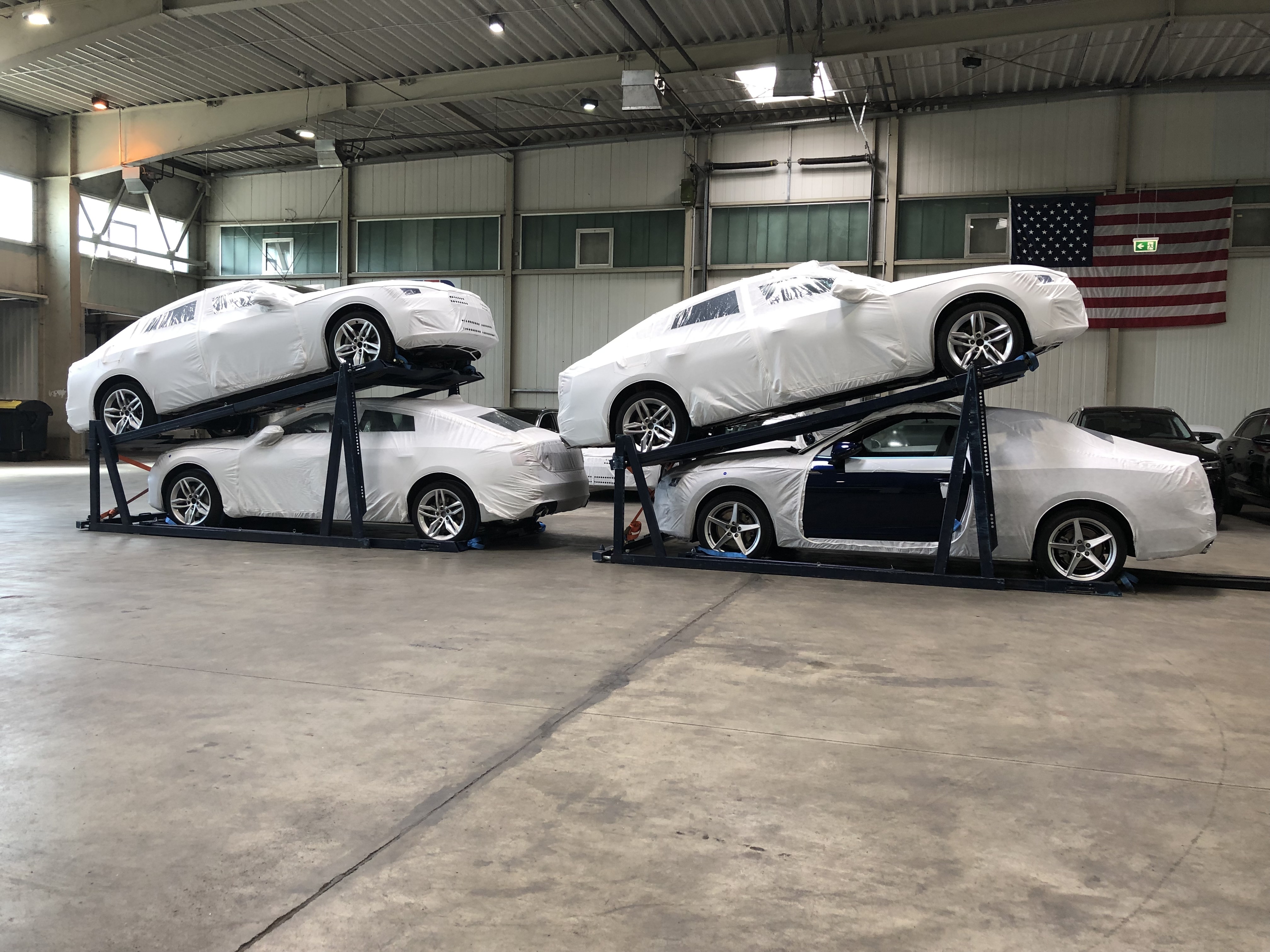
A crucial advantage of a modular vehicle racking system, such as our EL-Rak and R-Rak, is that the vehicle is supported at all four wheels. This wheel-based approach distributes weight more evenly, reducing stress on the battery pack and maintaining the manufacturer’s recommended restraints. Containerised transport also makes it possible to remove the battery from the vehicle before loading, as the cars no longer have to be driven onto a storage vessel (as in the case of Ro-Ro). This significantly reduces the fire hazards associated with electric vehicles and is sometimes a condition of transport along some routes.
Modular racking is also beneficial during rail transport, where peak G forces can be higher than on road or sea legs of the route. Independent wheel restraints prevent unwanted lateral shift, which is critical for electric vehicles, as battery housings are generally designed for structural rigidity, not the dynamic movement caused by repeated vibration impacts.
The racking framework itself also provides a stabilised enclosure inside the shipping container. This isolates the EV from the mechanical behaviour of the container walls, especially during sudden movements and rough weather.
Reducing Handling Risk Across Complex Routes
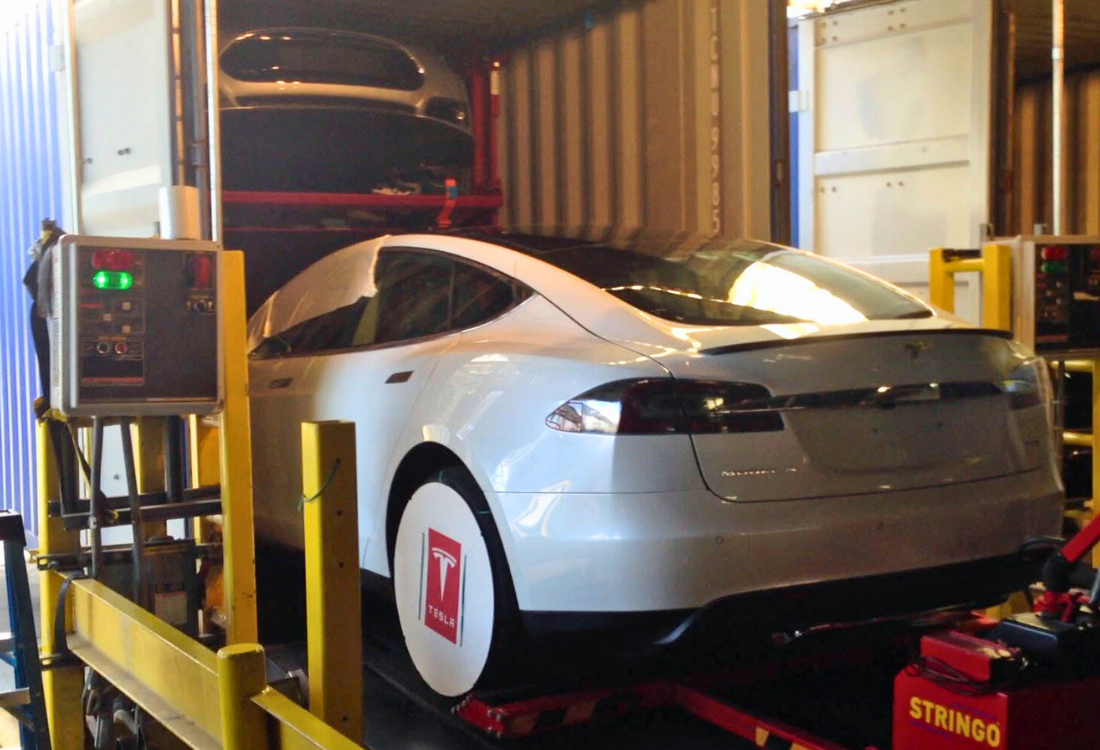
Handling is among the highest contributors to damage and system faults when transporting cars, whether conventionally or electrically powered. Each time the vehicle is driven, lifter-assisted or repositioned, there is a small but measurable increase in risk. This risk accumulates significantly across long and multimodal routes. Finished vehicle racking reduces this risk dramatically. Electric vehicles can be loaded externally onto the racking system (in the case of the EL-Rak), secured through the wheel trays, and forklifted into the container. Once secured, the cargo can progress through the entire multimodal chain without being touched. This ‘single handling event’ model is one of the most effective ways to protect EV battery systems and reduce diagnostic work at destination.
Strengthen Your Automotive Logistics Strategy In 2026
Trans-Rak’s container-based racking systems are engineered to support the unique safety, structural, and environmental needs of electric vehicles across international transport corridors. For a route-based assessment and technical guidance, please contact our team today by clicking here.