Every vehicle leaves the production line in a tightly controlled environment, but its first true engineering test begins the moment it enters the outbound logistics chain. For businesses overseeing automotive transport, the challenge is to maintain these factory-level standards throughout a sequence of handling events, modal transfers, and environmental conditions that were never part of the original design brief. Understanding this full car transport journey, not just as a logistics process but as an engineering stress cycle, is essential for safeguarding quality throughout long-distance vehicle transportation.
Stage One: Plant Release
When a new vehicle exits the plant, its structural tolerances, wheel alignment, and panel clearances are all within tight OEM specifications. Yet this pristine state is also when the car is at its most vulnerable. Suspension systems are normally tuned for road comfort, not repeated loading cycles. Painted surfaces are cured but are often still sensitive to abrasion, and the underbody panels in most cars are lightweight composite components designed for airflow, not impact.
During the first stage of movement, therefore – usually onto a road transporter or into a holding compound – forces transferred into the chassis are magnified by short wheelbase manoeuvres, tight turning radii and uneven road surfaces. This is why maintaining a predictable loading interface at the factory gate or ‘first mile’ is a central concern in modern car transport planning.
Stage Two: Pre-Carriage
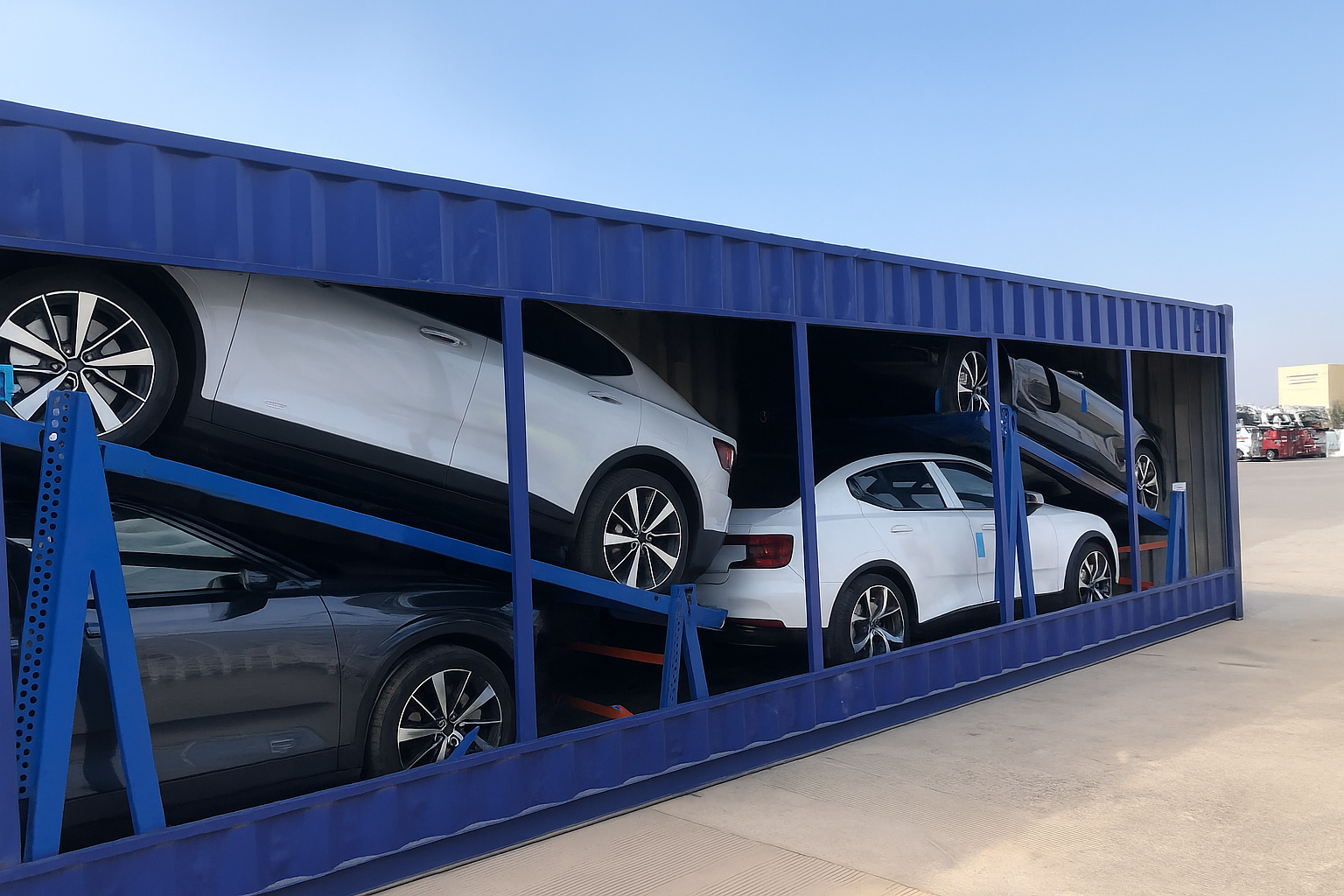
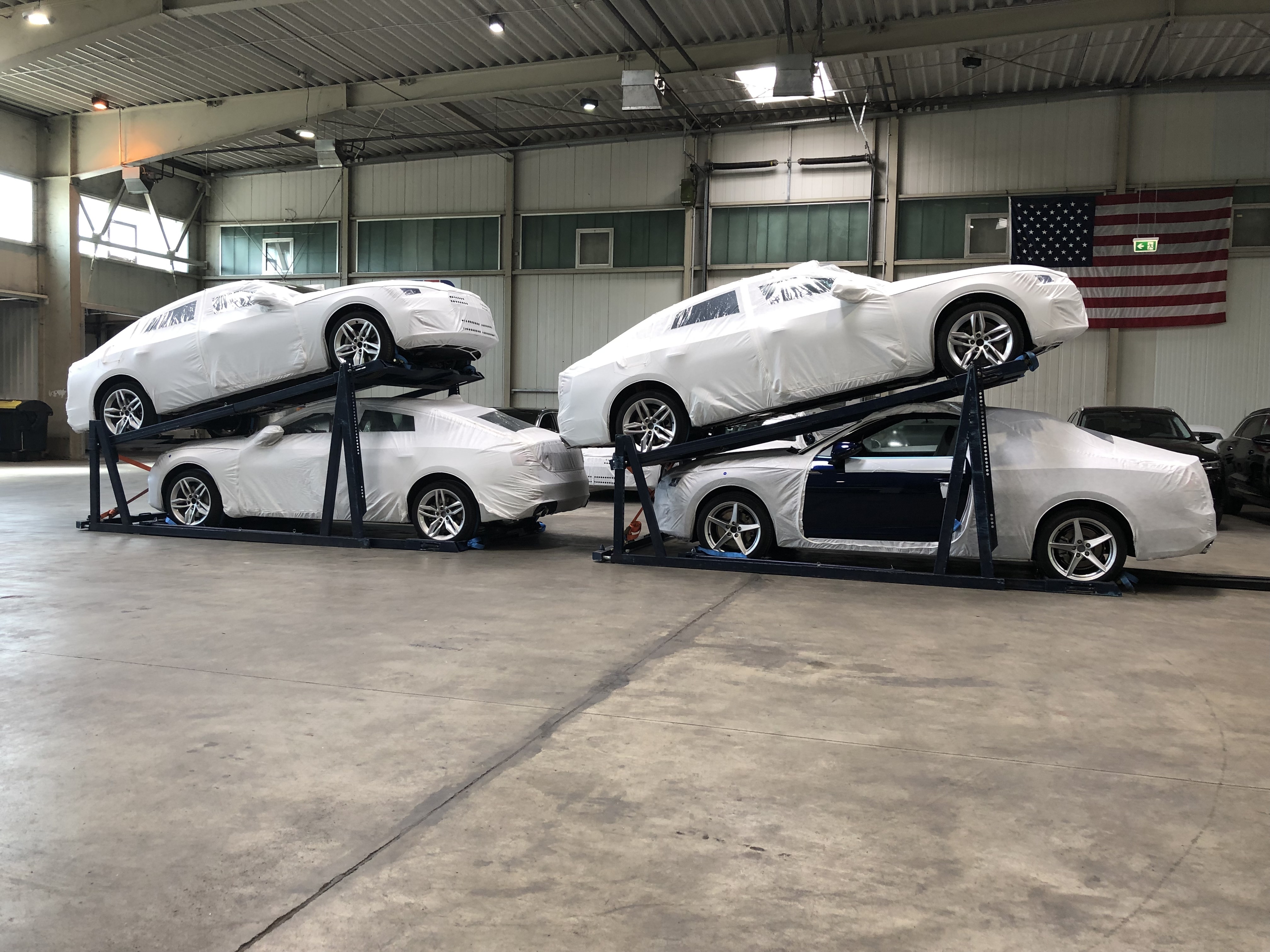
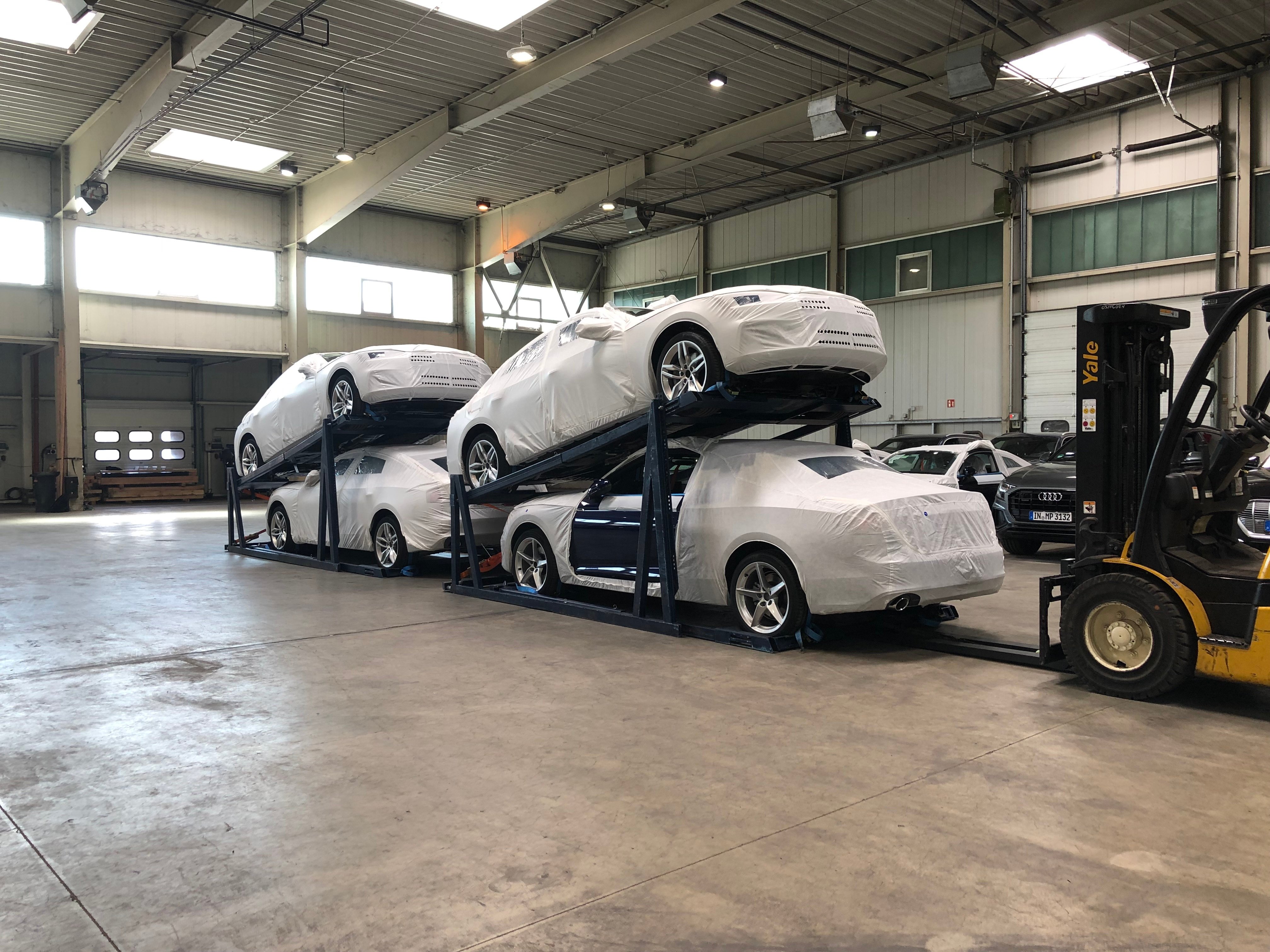
Whether by road or rail, the pre-carriage leg of the journey introduces additional dynamic forces greater than those encountered in normal driving conditions. For example, cars secured on open transporters are exposed to vibration frequencies between 5 and 20 Hz, a range that can cause oscillation in door panels, the boot lid, and undertrays if fasteners are not at full torque. Wind loading on mirrors and exterior trim also increases significantly at motorway speeds. Meanwhile, cars transported by rail encounter even more severe challenges. During shunting, longitudinal forces can exceed 2G, causing micro-movements in the tyres, suspension bushings and high mounted components. For electric vehicles (EVs), where battery packs are a rigid structural element, these impulses must be absorbed by the tyre and wheel strapping system. This is a core reason why containerised wheel-based restraint systems (e.g. our R-Rak) have gained ground among long-distance EV supply chains.
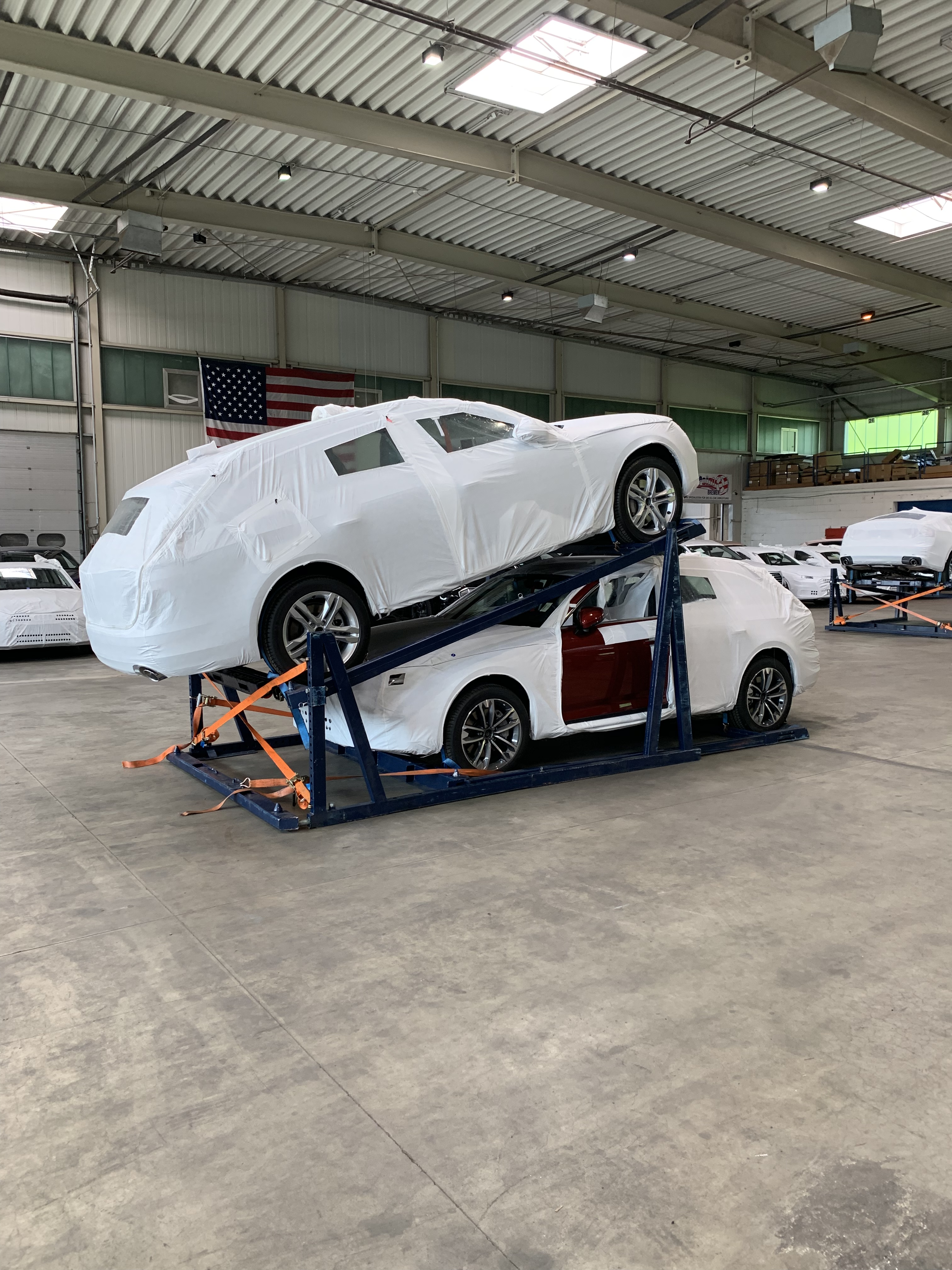
The modular racking systems used inside shipping containers stabilise the cargo by securing it through the wheels rather than the chassis. This keeps the suspension under natural compression and prevents shock loads from transferring into the body shell or battery housing.
Stage Three: Port Interface
Ports represent the most unpredictable environment in vehicle transportation. Surfaces vary, gradients shift, and climatic exposure is unavoidable. In some conditions, UV radiation can reach levels that accelerate clearcoat degradation, and salt particles can settle on metallic components within hours. From a quality control and risk management standpoint, the biggest challenge is extended dwell time. Vehicles designed to remain stationary for short periods may sit for days or even weeks while awaiting vessel allocation. Flat tyres, interior humidity buildup, and brake corrosion are all common side effects of long port standovers.
Containerised cargo transport eliminates these variables almost entirely. Assets remain enclosed at port side, protected from corrosive atmospheres, and stabilised in a fixed position that prevents suspension droop or tyre deformation.
Stage Four: Deep Sea Transit
Deep sea routes expose cars to roll, pitch, and heave; dynamic movements for which most passenger vehicles are not engineered. On Ro-Ro ferry decks, for instance, micro-motions can lead to incremental strap loosening, wheel shift, or underbody scuffing. Inside a container, meanwhile, modular racking systems mitigate these structural forces and environmental stress factors by locking each wheel into an independent tray. Because the restraint system isolates vertical and lateral movement, the vehicle experiences a more predictable load path. Structural stresses stay within the design tolerance of the suspension system, wheel bearings, and battery housing assemblies, avoiding the risk of damage. Containers also maintain a consistent microclimate throughout the journey, protecting cars from salt spray, humidity spikes, and thermal cycling during equatorial crossings, helping prevent corrosion and paint degradation.
Stage Five: Last Mile
On arrival at the destination port, non-containerised vehicles must undergo another sequence of short, high-risk manoeuvres before embarking on the ‘last mile’ to the customer. Each movement reintroduces the chance of contact damage, brake dust contamination or trim abrasion. In contrast, containerised automotive transport reduces the final leg to a single controlled unloading event at the distribution hub, preserving quality, minimising risk, and simplifying your inspection workflow.
Find Out More
If your current outbound model involves multiple handling stages or exposure to unpredictable port conditions, containerisation provides a more controlled logistics environment. Our modular racking systems support stable, high-density movements throughout the entire journey, from factory released to final delivery. For more information, please click here to contact our technical sales team.