Global vehicle transportation continues to develop, particularly as OEMs diversify their products and strategies across regional and national plants, knockdown facilities, and final assembly hubs. Flows now mix fully built units (FBU), with semi-knocked down (SKD) and completely knocked down (CKD) kits, creating a more complex outbound logistics landscape. Each format introduces different engineering complexities, handling requirements, and exposure risks that must be managed throughout the shipping process. In this article, we look at five of the most persistent challenges in modern automotive transport, as well as practical ways to mitigate them across FBU, SKD, and CKD routes.

1. Service Variability Across Different Territories
Whether moving fully built vehicles or transporting SKD – semi knocked down, or BIW – body in white structures to satellite plants, handling quality can vary significantly by region. For instance, different steering angles, yard manoeuvres, and handling equipment conditions all affect vehicle integrity. For BIW units, which lack exterior protection or sealed interiors, even small contact points during loading can result in deformation or corrosion.
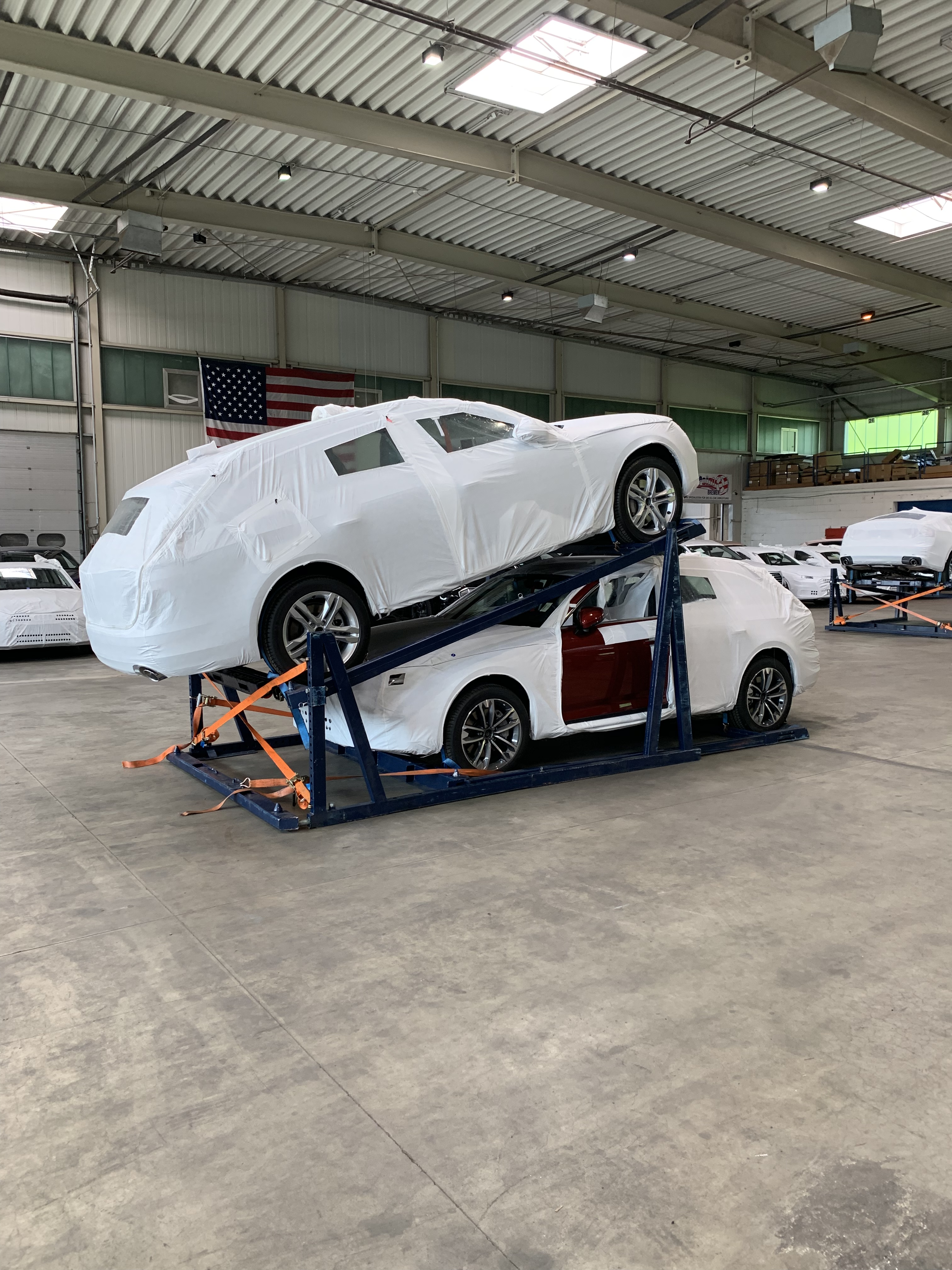
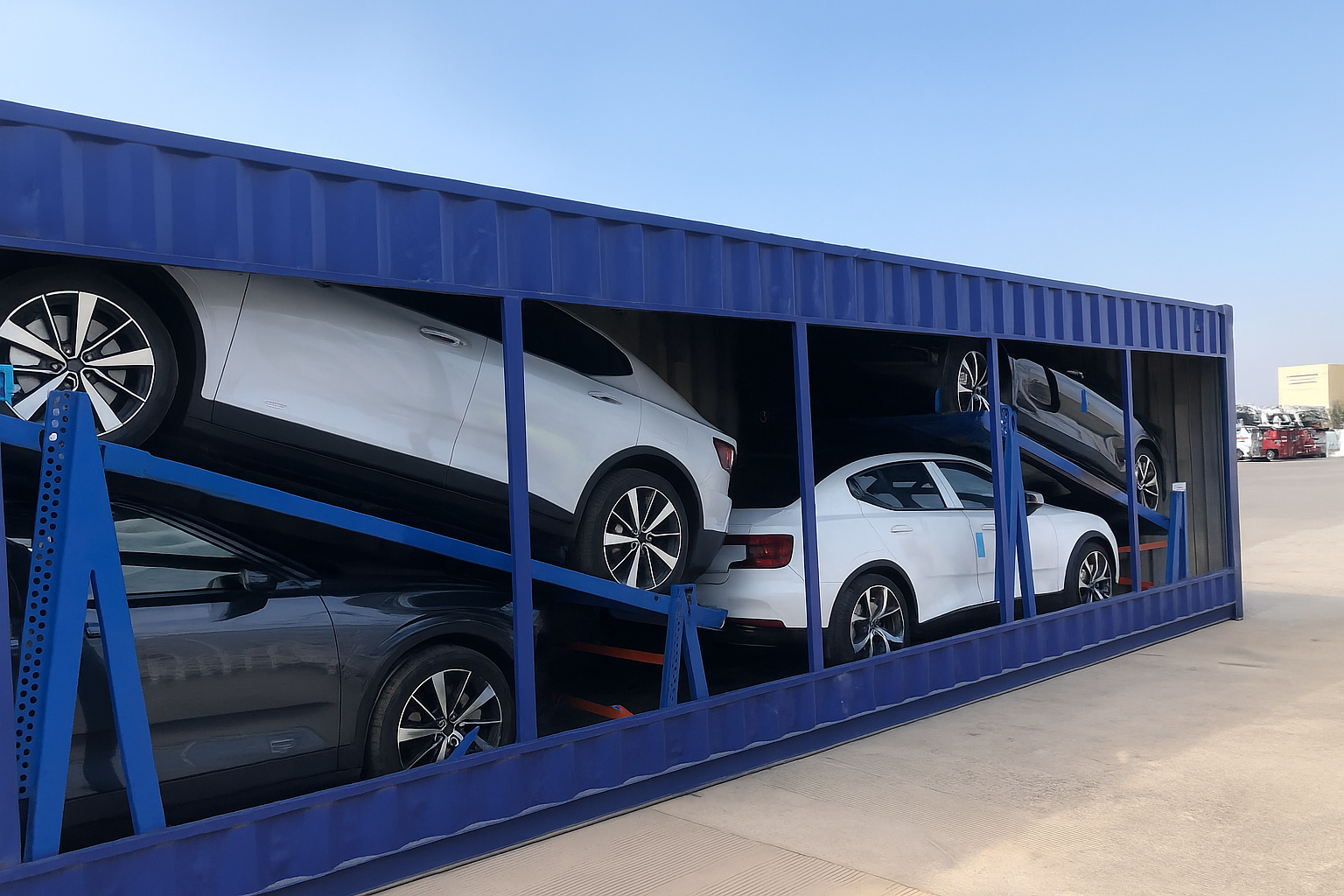
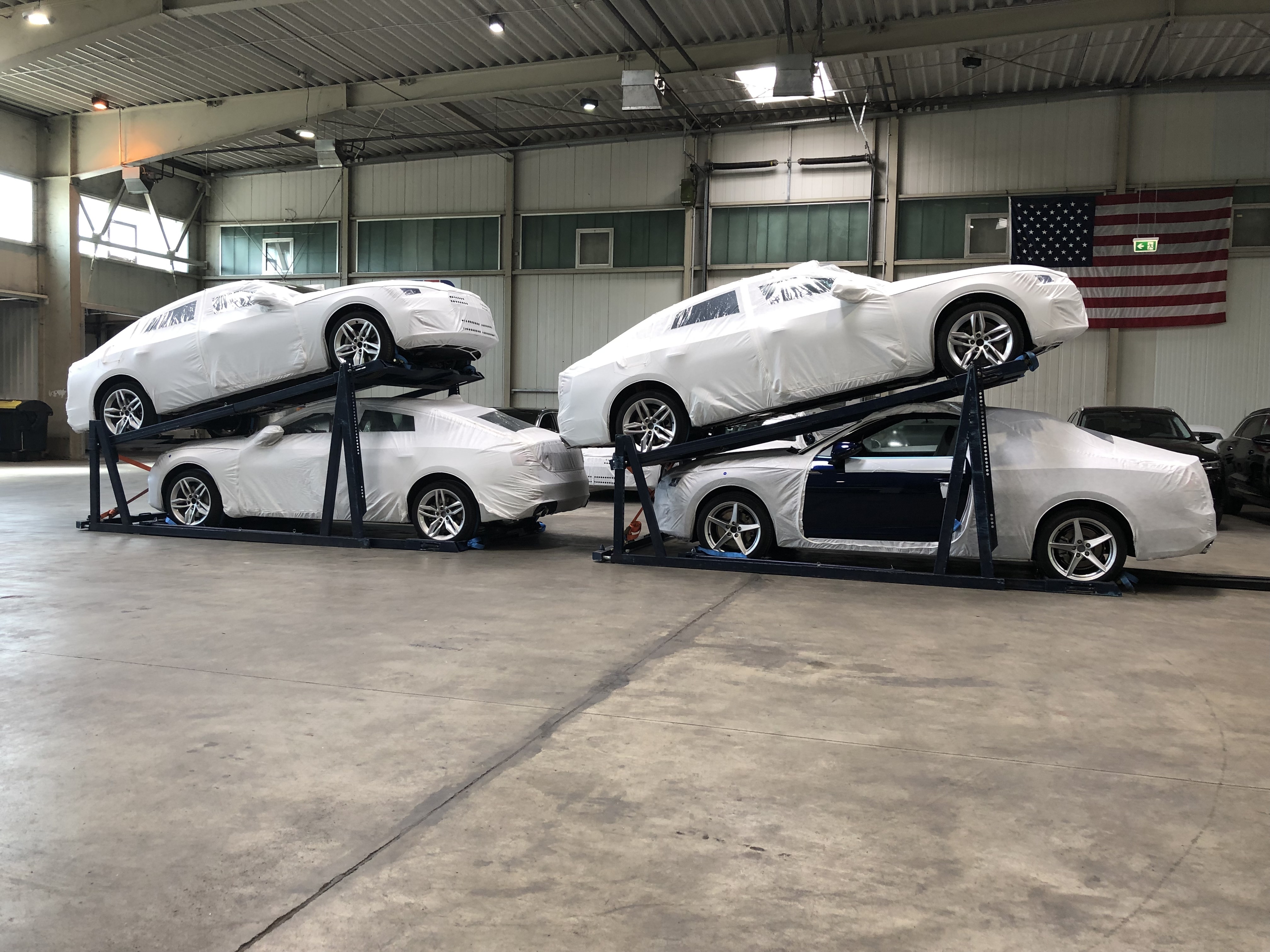
Solution: Reduce your reliance on manual handling. Containerised flows using modular racking hold FBU vehicles through the wheels, while SKD or BIW assemblies can be positioned on engineered frames that prevent metal to metal contact. By restricting movements to a single loading and unloading event, most handover risk is eliminated.
2. Environmental Exposure During Port Operations
Port dwell is one of the biggest threats to quality across all outbound automotive transport formats. BIW assemblies and CKD – completely knocked down kits are particularly vulnerable because their protective coatings are often minimal prior to final assembly. Salt-laden air, dust ingress or humidity can compromise a car’s weld points, interior cavities or joint surfaces long before the unit reaches its assembly plant.
Solution: Use an enclosed shipping method wherever possible. Shipping containers create a controlled microclimate that prevents corrosion and contamination during extended dwells. For BIW and CKD shipments, this sealed environment is essential for maintaining material integrity and preventing downstream rework.
3. Damage Risk During Multimodal Transfers
Road, rail, and sea legs each introduce forces that are not part of the original vehicle design envelope. FBU vehicles, for instance, can suffer from suspension cycling and vibration fatigue, while SKD structures and BIW shells (due to their reduced stiffness) can deform under unexpected dynamic loads. CKD kits, packed densely, are also at risk of movement within crates if exposed to sustained vibrations.
Solution: Stabilise your loads mechanically rather than relying on straps or manual placement. Wheel based racking systems for FBU shipments keep the suspension compressed naturally and isolate shock loads, while custom modular frames for SKD, CKD and BIW assemblies (such as our SKD-RAK) maintain rigid support, preventing flexing or micro-movements throughout rail and deep-sea transit.
4. Port And Route Planning Constraints
Traditional roll on roll off (RORO) routes usually rely on fixed schedules, specific deepwater ports and predictable loading windows; conditions that rarely hold consistently in the real world. This is a limiting factor when the outbound mix includes CKD or SKD cargoes going to inland factories, or BIW shells destined for regional welding plants.
Solution: Integrate container-based flows into your logistics strategy to unlock greater port flexibility. With container shipping, individual containers can move seamlessly through second ports, inland rail terminals and feeder networks, making them well suited to decentralised SKD/CKD assembly models. This routing resilience helps maintain programme flows even when RORO capacity is restricted.
5. Stricter OEM Quality Standards
Many vehicle manufacturers are tightening their acceptance tolerances across FBU, SKD and BIW shipments. Even minor surface blemishes on BIW panels or moisture infiltration within CKD kits can disrupt downstream assembly. And for FBU flows, cosmetic damage thresholds are now lower than ever, especially in premium markets.
Solution: Choose a transport methodology that provides predictable mechanical conditions for all vehicle formats. Containerised car transport, combined with a good modular racking or fixture system will give you stable and repeatable loading conditions and near zero exposure to risk, improving compliance with OEM quality KPIs for all kit and vehicle categories.
What Next?
If your outbound model involves a mix of FBU, SKD – semi knocked down, BIW – body in white, or CKD – completely knocked down cargoes, containerisation offers a unified, controlled transport environment. For more information, please contact one of the Trans-Rak team today by clicking here, or by calling 44 1926 40 82 82.