 Automotive logistics was once a largely linear process. Production aligned with vessel schedules, models were moved in bulk, and logistics teams could forecast months ahead with confidence. Fast forward to 2026, and exporters operate in a very different landscape. The growth of electric vehicles (EVs), fragmented order patterns, erratic shipping container costs, and capacity bottlenecks among major operators are all changing how vehicles are moved around the world – and placing new pressures on traditional transport models.

Containerised car shipping has stepped into that opening, providing a means for OEMs and transporters to maintain flexible, smooth supply chains, and control costs in unpredictable geopolitical conditions. In this article, we look at the biggest challenges exporters now face, and how container-based solutions are addressing them.
Challenge one: production cycles are less predictable
Not all units leave the line in perfect production waves, and not all are fully built units (FBUs). Rather than high-volume runs of a single model, as used to be the norm, variants are now often introduced mid-cycle, and region-specific features are configured late in the process. Many consignments also include body in white (BIW) units, and there may be short runs, mixed powertrain batches, and individual specs that make it harder to fill a Ro-Ro vessel efficiently. This unpredictability creates pressure at the logistics end. Holding vehicles until a full batch is available increases yard congestion, ties up capital, and delays revenue recognition. On the other hand, dispatching partial loads erodes cost efficiency.
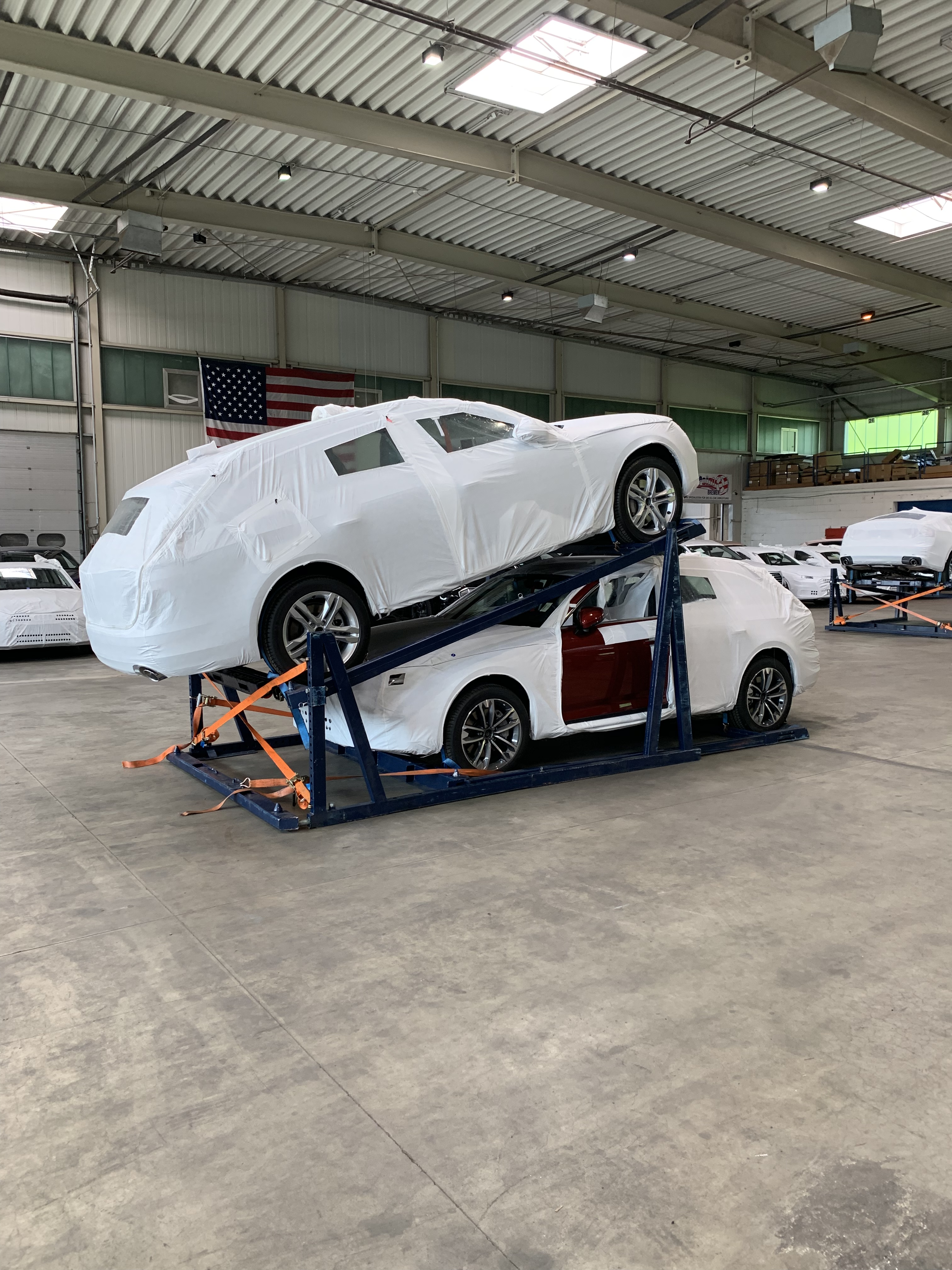
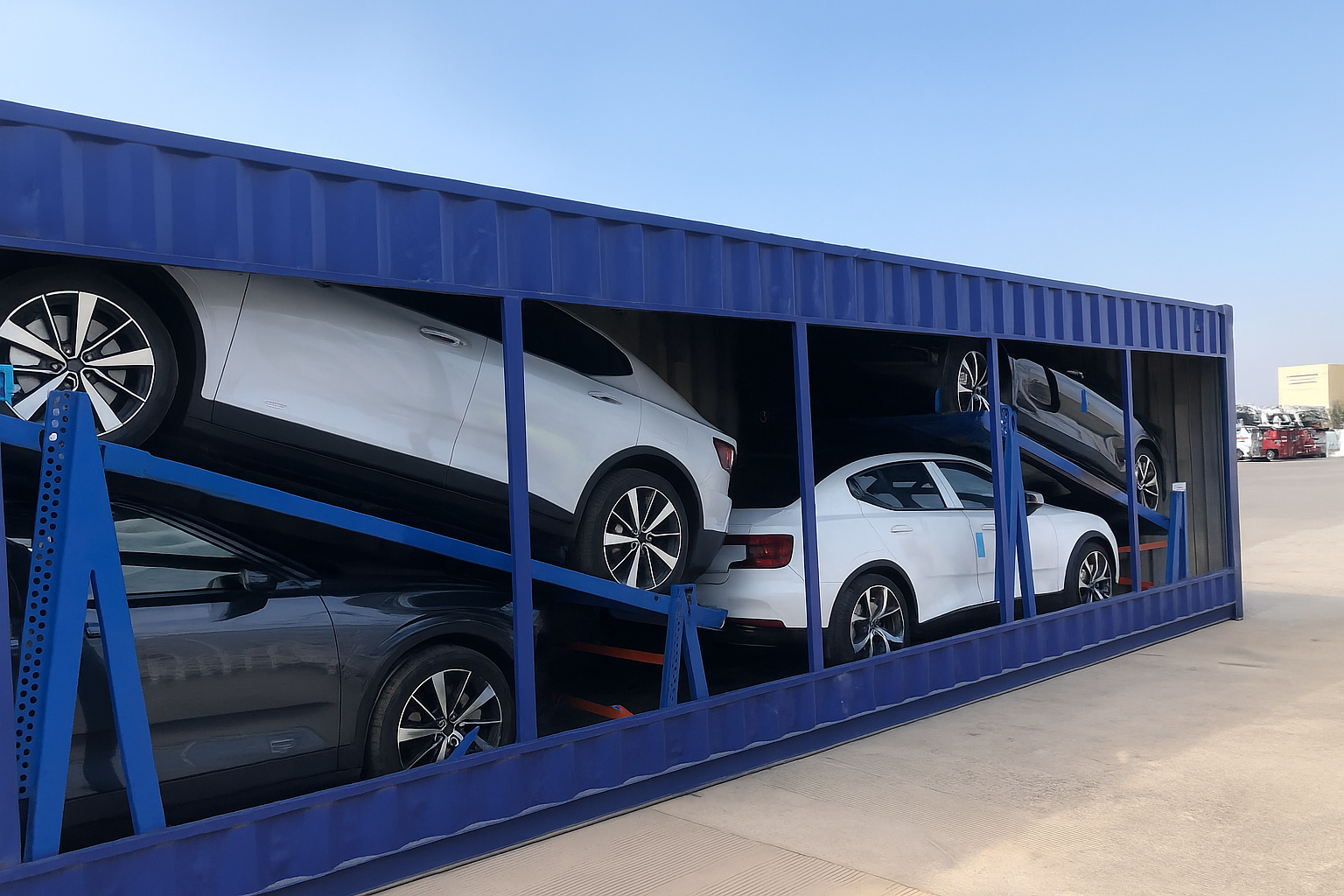
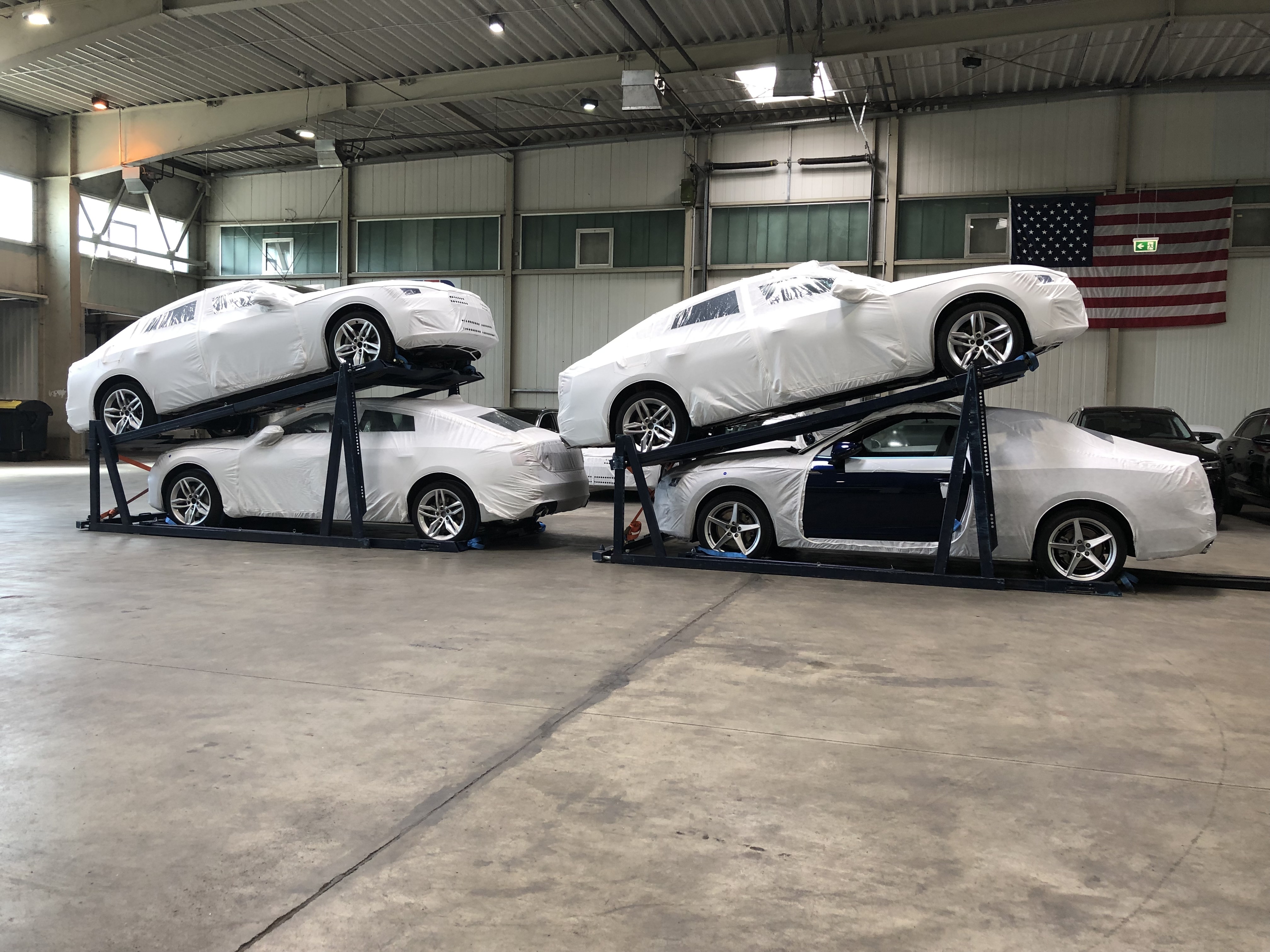
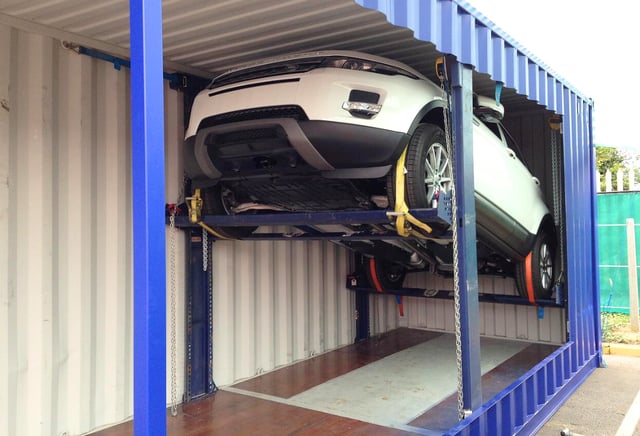
Automotive container racking systems make this erratic logistics pattern more manageable. Smaller lots can be shipped more frequently without waiting for volume maturity, and many systems allow mixed SKUs to travel in the same container without having to redesign the loading plan from scratch. When the model order patterns shift, the logistics system can adapt instead of stalling.
Challenge two: Ro-Ro availability isn’t guaranteed any more
Once the workhorses of the global FVL sector, roll on roll off vessel (Ro-Ro) availability is no longer the guarantee it used to be. Port congestion, safety issues, and vessel shortages have pushed many OEMs to rethink their reliance on Ro-Ro sailings. Missing a departure can push stock into the next quarter, significantly impacting launch targets. Container flows, by comparison, are more consistent. Freight moves daily, routes can be changed fairly quickly if capacity tightens, and inland road or rail legs can carry the same load (via shipping container) without repacking. This gives transporters a buffer against unexpected delays and disruption.
Challenge three: cost per vehicle is rising faster than visibility
Export budgets are being squeezed from multiple angles: freight rates vary almost week to week, port storage fees are climbing around the world, and shipping container availability can swing sharply with global demand. When shipping prices fluctuate in this way, the only reliable offset is better space utilisation. Yet many OEMs still operate with limited cost transparency across each movement. A vehicle might leave the production plant with one forecasted cost and arrive in-market with another entirely, once demurrage, repositioning, handling charges and idle time are added in. When using containerised flows, one car per box isn’t usually commercially sustainable when volumes are high and margins are thin. Automotive container racking systems solve this directly by stacking multiple vehicles safely within the same shipping container. This spreads the cost of international freight across more units, lowering the cost per vehicle, and turning a variable, unpredictable cost into a more stable and visible one. Better density also reduces the number of containers you need overall, which naturally cuts exposure to volatile rate changes, port dwell fees, and empty repositioning charges.
Next steps: Download our guide to containerised car transport
For more information about multi-purpose automotive racking systems and their role in containerised car transport, please download our free Containerised Car Transport Guide by clicking here.