


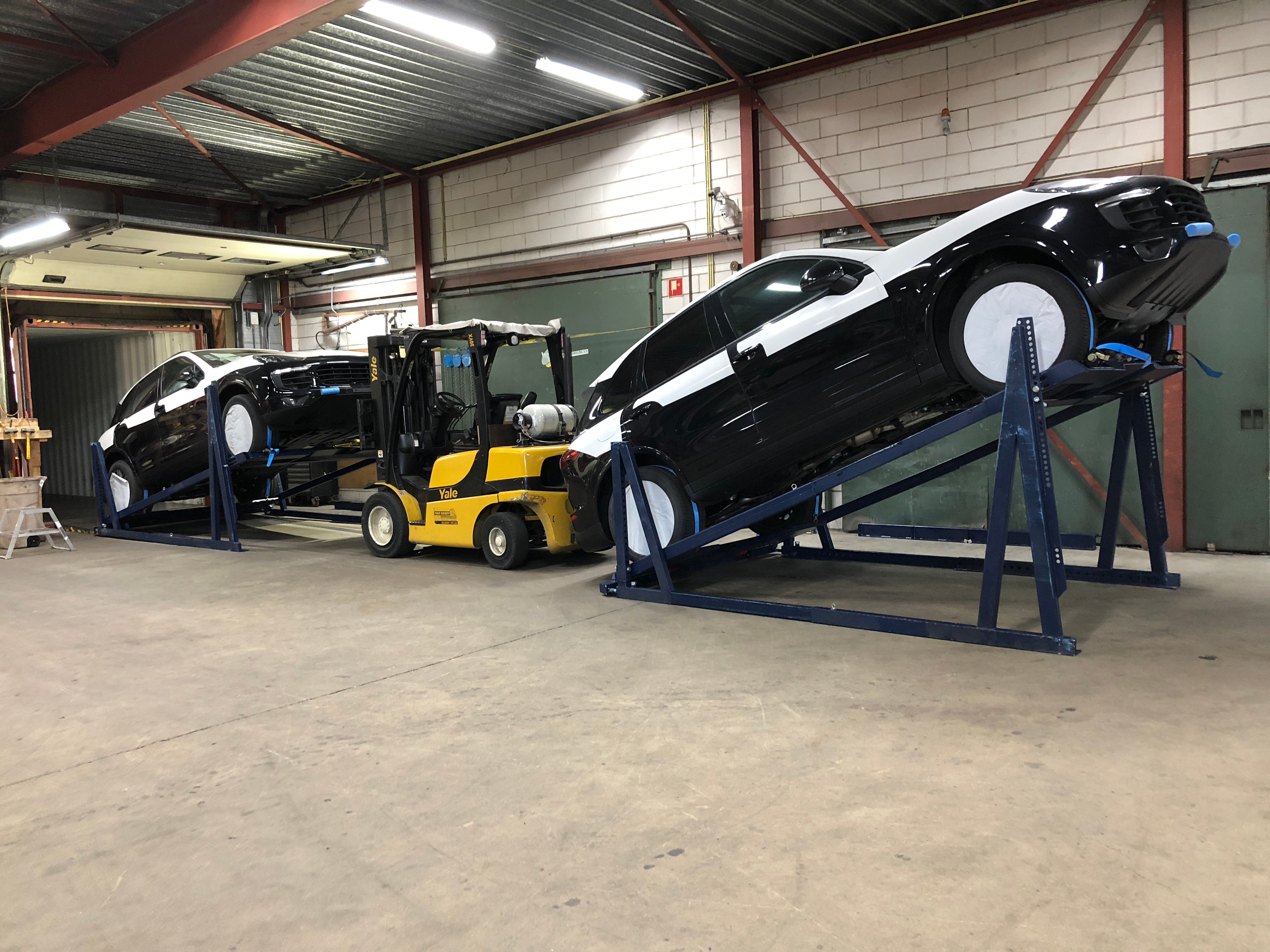
The growth of electric vehicles (EVs) has introduced a different risk profile into vehicle logistics. Unlike internal combustion engine (ICE) vehicles, EVs contain high-voltage lithium-ion batteries that can present fire and re-ignition risks if damaged, mishandled, or improperly stored. For logistics operators, this changes how vehicles are inspected, stored, and moved at every stage of electric car transport.

These risks are not just theoretical, either. They affect day-to-day operations in ports, compounds, and containerised shipments, and have been linked to several high-profile fires at sea since 2020. The Felicity Ace, a RoRo vessel which caught fire in the Altantic in March 2022, is just one of a list that also includes the Genius Star XI (2023), and the Morning Midas (2025), as well two documented car carrier fires in-port at Zeebrugge, Belgium, in 2025. By early 2022, ship fires had already hit a decade high of 200+ incidents, making lithium-ion batteries a major concern for marine insurers and safety bodies.
What is the best way to safely transport electric vehicles that use high-voltage lithium-ion batteries? Let’s start by looking at the key risks involved when transporting EVs.
What Are The Main Risks When Transporting Evs?
The primary concern in EV logistics is thermal runaway, which is a failure process in lithium-ion batteries where a rise in temperature triggers a self-sustaining reaction inside the cell. As the battery heats up, internal components begin to break down, releasing more heat and flammable gases. This creates a chain reaction where the temperature continues to increase without external input. Once it starts, it is difficult to stop and can eventually lead to fire, explosion, or re-ignition even hours or days after the initial event appears to be controlled. Unlike conventional vehicle fires, these incidents can be difficult to fully extinguish, which is why they’re such a danger on board ship.
This becomes particularly relevant at handover points. A vehicle arriving at a port with undetected battery damage may appear stable during the initial inspection but pose a risk during storage or onward movement. In an enclosed environment, such as when transporting cars in containers, the consequences are more severe due to limited access and ventilation.
As a result, one of the common issues when transporting cars – undetected damage – has greater implications for EVs than for conventional vehicles.
Regulatory Requirements And Industry Guidelines
Because of these dangers, EV transport is increasingly governed by specific regulations and guidance. International frameworks such as the International Maritime Dangerous Goods (IMDG) Code and UNECE (United Nations Economic Commission for Europe) Model Regulations set out clear requirements for handling damaged or defective lithium-ion batteries. In practice, this means operators must identify whether a vehicle is classified as “damaged” or “high-risk” before shipment. That classification determines whether additional measures, such as isolation, specialised packaging, or restrictions on containerisation, are required.
These requirements can directly influence your operational decisions, as a vehicle cleared for standard electric car transport may follow your normal handling processes, while a suspect unit must be segregated and managed under stricter controls.
Practical Risk Mitigation Measures
Managing EV transport risk depends on consistent processes rather than isolated interventions. For example:
- Inspection protocols need to be adapted to identify battery-related damage, not just visible bodywork issues.
- Clear classification procedures are also essential; i.e. vehicles should be categorised based on their condition, with defined handling rules for each category. This includes decisions on storage location, transport method, and monitoring requirements.
- Training plays a role as well. Yard staff, drivers, and inspection teams need to understand how EV risks differ from conventional ICE vehicles, particularly in recognising the early signs of battery issues.
- Finally, information flow must be reliable throughout the supply chain. Accurate, up-to-date records of vehicle condition reduce the likelihood of inappropriate handling decisions at later stages.
Get In Touch
From high end electric sports cars to hybrid SUVs and specialist vehicle movements, Trans-Rak provides racking solutions built around real transport challenges. Contact our specialists today to find out more about the right system for your loading requirements.
Safe EV transport depends on understanding the technical and regulatory challenges associated with high-voltage batteries, particularly where damage, thermal events, or isolation procedures are concerned. Our latest piece on the Trans-Rak blog outlines the main risks, the governing requirements, and the solutions operators can apply to strengthen transport safety and control.

.jpg)

.jpg)


