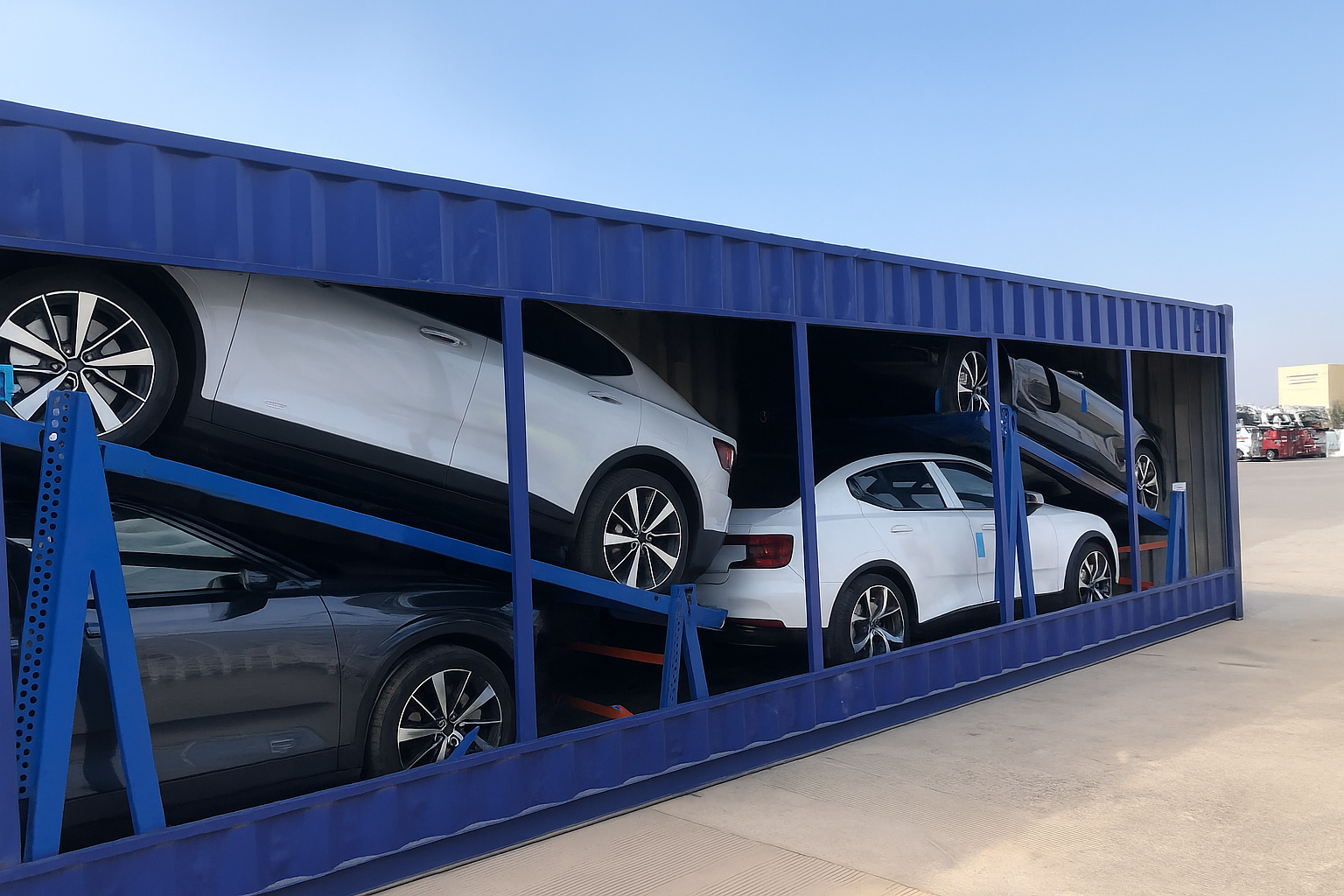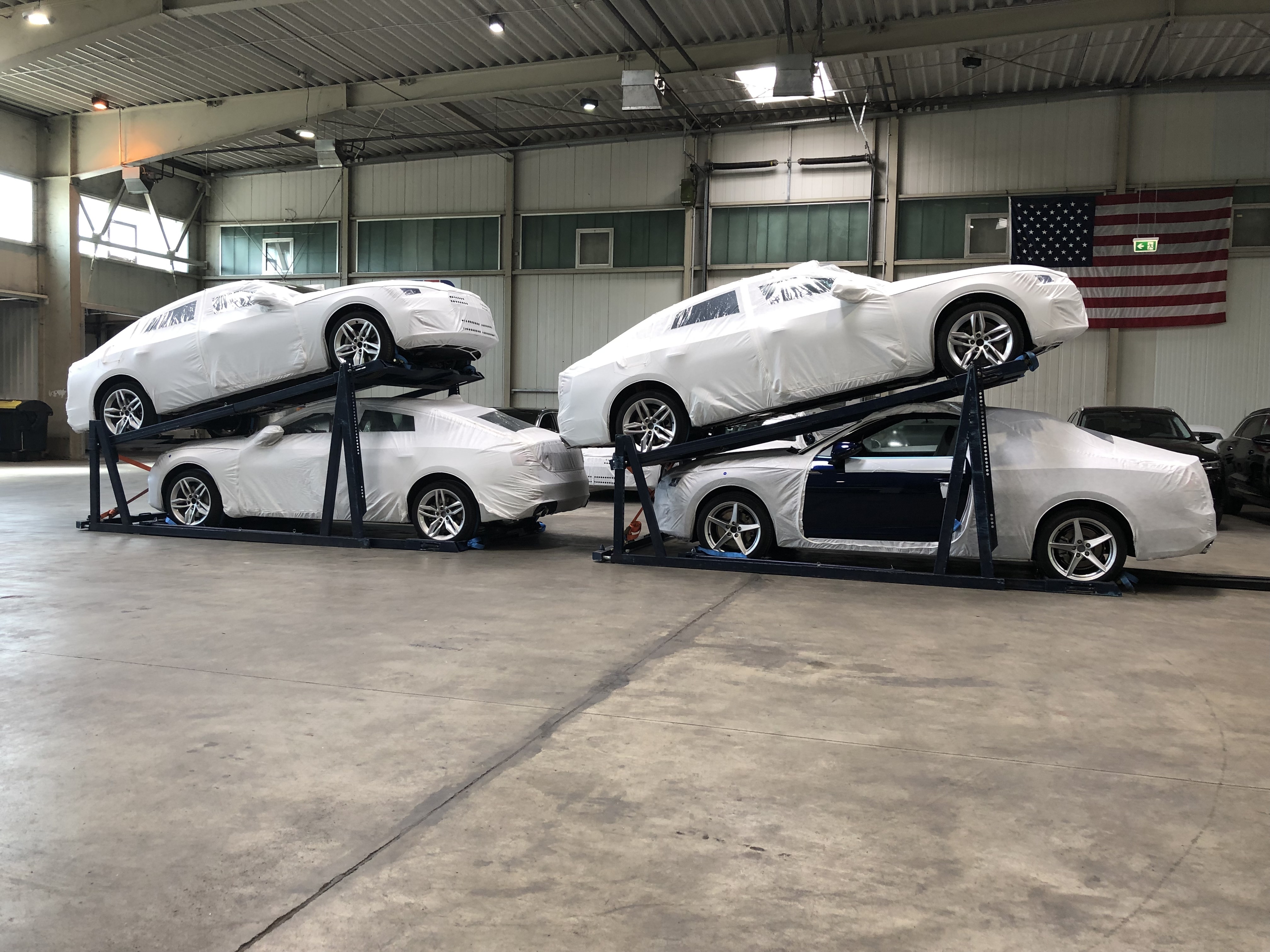
For many years, the art of loading cars into containers successfully relied heavily on experience. There was nothing particularly ‘digital’ about it. Skilled operators developed effective methods through repetition and trial and error, adapting their racking configurations to different vehicle profiles and constraints on the ground. However, as vehicle mixes became more complex and tolerance for error began to shrink, some operators began to reach for innovative software tools to help optimise their vehicle logistics strategies.

Digital twins are one such tool; essentially a virtual, software-generated replica of a real-world process or asset that allows operatives to test different loading scenarios before they happen in real life.
How Are Digital Twins Used In Vehicle Storage Solutions?
In container planning, a digital twin is used to simulate how your cars will be loaded into a shipping container using a specific configuration. Planners can test different vehicle combinations, container sizes, loading sequences, and clearances to see what will work reliably, without the risk of trial and error on live vehicles. This helps identify frustratingly common issues like clearance conflicts, inefficient space use, or unstable load distributions at the desk rather than the loading yard, minimising damage and improving repeatability when the plan is executed on the ground.
Simulation As A Risk-Reduction Tool
Using digital twins can save time and reduce risks when loading cars into containers. Even small issues with space, clearance, or weight balance can add up over a long journey. Simulation software shows how different loading plans perform with various vehicle combinations, helping you achieve predictable, efficient results. In all cases, reliability is as important as packing for maximum capacity.
Validating Your finished Vehicle Racking Decisions
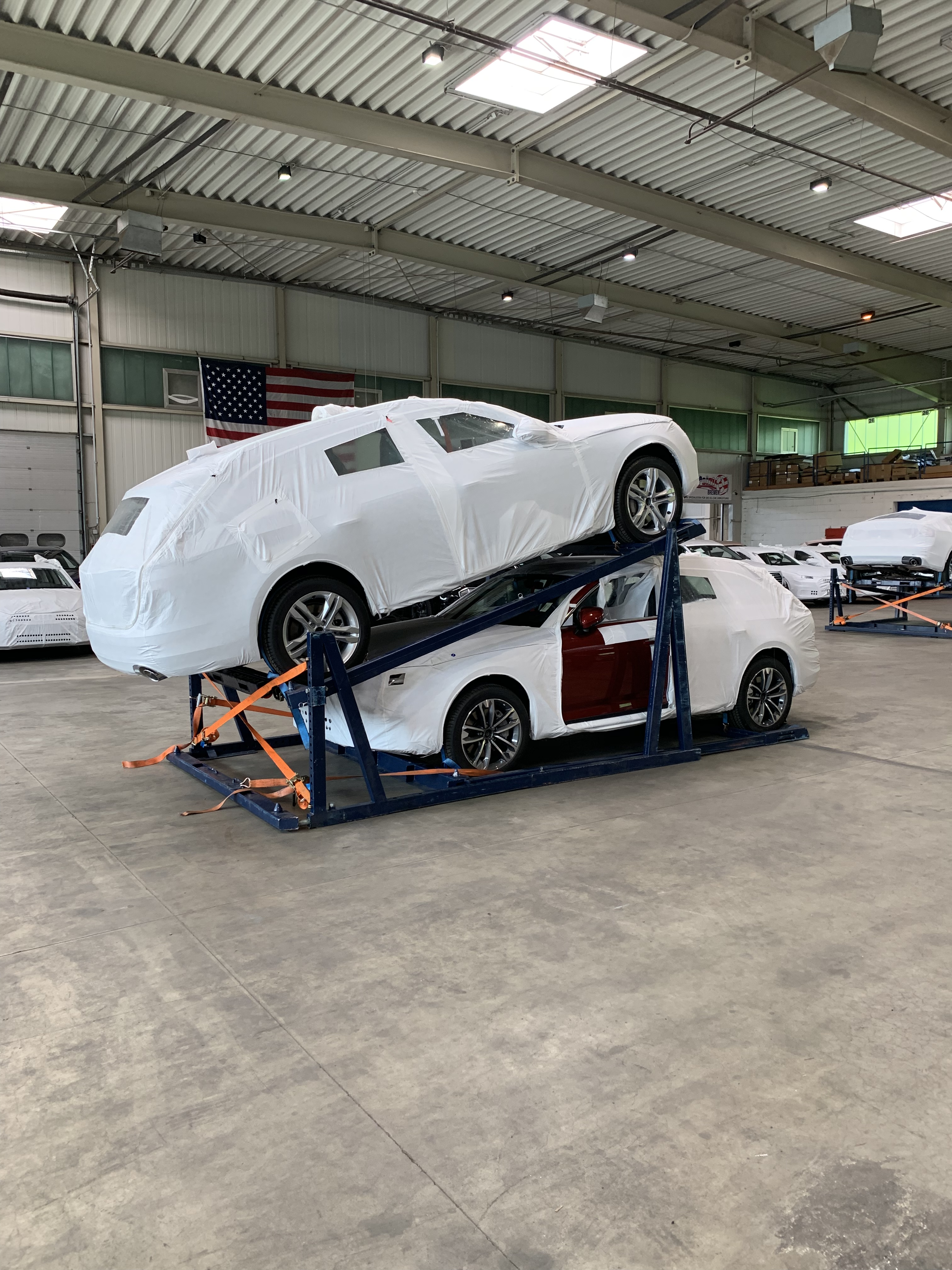
Finished vehicle racking plays a central role in container loading outcomes, but racking decisions are often evaluated in isolation. In other words, racking investment decisions are often made by looking at the rack itself — its dimensions, rated capacity, certification, or how many vehicles it can support. What’s sometimes missing is a wider evaluation of how that racking actually performs once it is used inside a container, with real vehicles, real clearances, and real loading sequences.
When racking is evaluated in isolation, teams may assume a configuration will work because it has worked before, or because it fits on paper. But once vehicles with different heights, wheelbases, or weight distributions are introduced, that same racking setup may lead to awkward loading angles, slower handling times, or a higher damage risk.
A digital twin solves this problem by testing finished vehicle racking in context, not in isolation, recreating the entire container-loading environment — including the container dimensions, the racking configuration, the vehicles being moved, and the sequence in which they are loaded.
This is particularly important when the same racking system is used for multiple vehicle types or markets. A configuration that works well for one model mix may introduce inefficiencies or risks elsewhere. By validating your racking layouts digitally, your logistics teams can standardise
configurations that are proven to perform reliably, rather than relying on local adjustments at each site.
Next Steps
Whether you are looking for ways to optimise your container loads, planning international EV shipments, or reviewing your total landed cost, our racking solutions are designed to address the challenges faced by real-world logistics operations. To explore your options, please click here to request a call back from one of our experienced team.
What if you could test every container-loading scenario before touching a vehicle? Digital twins are transforming how cars are loaded, stored, and transported; reducing risk, improving utilisation, and speeding up operations. In our latest article, we explore how simulation is changing vehicle logistics.